

Wall tiles designed for residential interiors function as a performance-led vertical surface system that determines moisture protection, hygiene control, visual order, structural durability, maintenance efficiency, sustainability outcomes, and long-term interior value across living spaces.
Wall tiles design regulates how interior walls respond to humidity, staining, cleaning frequency, impact contact, and light behaviour. Material selection defines water absorption rate, chemical stability, colour retention, and service lifespan. Tile size and thickness control joint density, structural rigidity, impact resistance, and adhesive bond reliability. Surface finishes govern cleanability, glare reduction, light diffusion, and surface stability under repeated wiping. Colour systems influence brightness distribution, spatial perception, cleanliness signals, and aesthetic longevity. Layout geometry establishes alignment, repetition, proportion, and visual calm across vertical planes.
Grout specification determines moisture blocking, stain resistance, hygiene behaviour, joint stability, and surface continuity. Room-specific wall tiles design ensures correct functional performance in bathrooms, kitchens, living areas, corridors, and utility spaces. Integrated wall tiles design aligns material, size, thickness, finish, colour, layout, grout, adhesive, and coverage as one coordinated system that protects substrates, minimises maintenance effort, reduces renovation cycles, supports sustainable interior construction, and aligns with modern and luxury residential interior standards.
What Is Wall Tiles Design?
Wall Tiles design defines the performance-led selection of tile material, size, surface finish, colour system, layout geometry, and grout specification applied to interior wall surfaces to achieve hygiene control, moisture resistance, visual order, durability, and long-term maintenance efficiency. Wall tiles design functions as a vertical surface system. Correct specification protects substrates. Performance accuracy ensures residential interior longevity.
Functional Purpose
Interior wall performance improves when tile systems protect surfaces from moisture, staining, and frequent cleaning exposure. Dense materials prevent absorption. Stable finishes maintain appearance. Correct design reduces long-term surface degradation.
Material Selection
Wall surface reliability increases when tile materials maintain low porosity and chemical stability. Porcelain tiles absorb below 0.5% water. Ceramic tiles support vertical hygiene zones. Material accuracy defines wall lifespan.

Size Strategy
Visual order improves when tile dimensions reduce joint density and surface fragmentation. Large wall tiles lower grout exposure by approximately 30–35%. Reduced joints limit residue accumulation. Dimensional balance supports clean interiors.
Finish Control
Cleaning efficiency improves when surface finishes resist staining and excessive glare. Matt and satin finishes diffuse light evenly. Smooth glazed finishes simplify wipe-down. Finish selection governs wall usability.
Colour Systems
Brightness and cleanliness perception strengthen when colour palettes reflect light and maintain neutral balance. Light and mid-tone colours enhance illumination. Neutral systems preserve timeless appeal. Colour stability supports visual calm.
Layout Logic
Visual discipline improves when layout geometry maintains straight alignment and repetition. Straight-lay and stacked patterns preserve order. Consistent joint lines reduce visual noise. Ordered layouts reinforce hygiene cues.
Grout Specification
Wall hygiene improves when grout limits absorption and discolouration. Narrow joints below 3 mm reduce dirt traps. Low-porosity or epoxy grout prevents staining. Correct grout completes wall performance.
Application Zones
Performance accuracy increases when wall tiles design aligns with exposure level by room. Kitchens prioritise stain resistance. Bathrooms require moisture protection. Living areas focus on visual order and durability.
What Is Wall Tiles Design For Residential Interiors?
Wall tiles design for residential interiors defines the engineered selection of tile material, size, surface finish, colour system, layout geometry, and grout specification applied to interior wall surfaces to deliver hygiene control, moisture resistance, visual order, durability, and low-maintenance performance. Wall tiles design operates as a vertical surface system. Correct specification protects substrates. Performance accuracy sustains long-term residential interior quality.
Functional Role
Residential wall performance improves when tiled surfaces protect against moisture, staining, and repeated cleaning exposure. Dense materials limit absorption. Stable finishes preserve appearance. Functional accuracy prevents premature surface degradation.
Material Choice
Wall surface reliability increases when tile materials maintain low porosity and chemical stability. Porcelain tiles absorb below 0.5% water. Ceramic tiles suit vertical hygiene zones. Material accuracy defines wall lifespan.
Size Planning
Visual order improves when wall tile dimensions reduce joint density and surface fragmentation. Large-format wall tiles lower grout exposure by approximately 30–35%. Reduced joints limit residue accumulation. Dimensional balance enhances clean interiors.
Finish Selection
Cleaning efficiency improves when wall tile finishes resist staining and excessive glare. Smooth glazed, matt, and satin finishes support easy wipe-down. Controlled reflectivity enhances visual comfort. Finish accuracy supports daily usability.
Colour Systems
Brightness and cleanliness perception strengthen when colour palettes reflect light and maintain neutral balance. Light and mid-tone colours improve illumination. Neutral systems preserve timeless appeal. Colour stability reinforces visual calm.
Layout Control
Visual discipline strengthens when wall tile layouts maintain straight alignment and repetition. Straight-lay and stacked patterns preserve order. Consistent joint lines reduce visual noise. Ordered geometry reinforces hygiene cues.
Grout Strategy
Wall hygiene improves when grout limits absorption, discolouration, and contaminant retention. Narrow joints below 3 mm reduce dirt traps. Low-porosity or epoxy grout prevents staining. Correct grout specification completes wall performance.
Room Zoning
Performance accuracy improves when wall tiles design aligns with exposure levels by room function. Bathrooms require moisture protection. Kitchens demand stain resistance. Living areas prioritise visual order and durability.
Why Wall Tiles Design Is Important For Interior Surfaces?
Wall tiles design is important for interior surfaces because vertical surface specification controls hygiene, moisture protection, visual order, surface durability, and long-term maintenance performance across residential interiors. Interior walls face staining, humidity, impact, and frequent cleaning. Correct wall tiles design protects substrates, preserves appearance, and stabilises interior quality over time.
Moisture Protection
Interior surface reliability improves when wall tiles block moisture penetration and humidity exposure. Low-porosity tiles prevent water ingress. Protected substrates resist mould and deterioration. Moisture control remains essential in kitchens, bathrooms, and utility areas.
Hygiene Control
Cleanliness standards increase when wall tiles resist staining and bacterial retention. Dense, glazed surfaces prevent contaminant absorption. Reduced grout exposure limits residue buildup. Hygienic walls support healthier residential environments.
Visual Order
Interior clarity improves when wall tiles establish structured, repeatable surface geometry. Aligned layouts reduce visual noise. Consistent joint lines guide perception. Ordered walls enhance spatial calm and design coherence.
Durability Performance
Surface lifespan extends when wall tiles resist abrasion, impact, and chemical cleaning agents. Fired ceramic and porcelain tiles tolerate repeated cleaning. Stable finishes maintain appearance. Durable walls reduce refurbishment frequency.
Maintenance Efficiency
Daily upkeep effort decreases when wall tiles allow fast and effective cleaning. Smooth finishes wipe clean easily. Low-absorption materials resist staining. Maintenance efficiency supports practical living.
Light Management
Brightness perception improves when wall tiles reflect and diffuse light effectively. Light-toned tiles enhance illumination. Balanced reflectivity reduces glare. Light management improves interior comfort and visibility.
Room Function Accuracy
Interior performance improves when wall tiles design aligns with room-specific exposure levels. Bathrooms prioritise moisture resistance. Kitchens require stain control. Living areas focus on visual order. Functional alignment prevents misuse-related degradation.
Surface Protection
Underlying wall integrity improves when tiles shield plaster and masonry from damage. Tiled surfaces absorb wear instead of substrates. Protective layers extend structural longevity. Surface protection reduces repair costs.
Aesthetic Longevity
Design relevance sustains when wall tiles avoid trend-dependent finishes and colours. Neutral palettes age predictably. Simple layouts retain adaptability. Aesthetic longevity protects long-term interior value.
How Does Wall Tiles Design Protect Walls From Moisture And Stains?

Wall tiles design protects walls from moisture and stains by creating a low-porosity, chemically stable, and continuously sealed vertical surface system that blocks water ingress, prevents liquid absorption, and resists contaminant penetration in residential interiors. Correct specification shields substrates. Dense materials limit damage. Integrated design preserves wall integrity over time.
Low Porosity
Moisture penetration reduces when tile bodies maintain very low water absorption levels. Porcelain tiles absorb below 0.5% water. Dense structures prevent capillary action. Limited absorption protects plaster and masonry substrates.
Glazed Surfaces
Stain resistance improves when wall tiles use fired, impermeable glazes. Glazed finishes block oils, soaps, and food splashes. Chemically stable surfaces resist discolouration. Smooth faces enable easy cleaning.
Grout Sealing
Wall protection strengthens when grout limits moisture and stain absorption at joint lines. Narrow joints below 3 mm reduce exposure. Low-porosity or epoxy grout blocks seepage. Sealed joints prevent contaminant migration.
Continuous Coverage
Barrier performance improves when tiling extends across high-exposure wall zones. Full-height coverage shields splash and steam areas. Continuous surfaces eliminate absorbent gaps. Extended coverage reduces hidden moisture damage.
Layout Precision
Leak risk decreases when tile layouts maintain tight alignment and even joint distribution. Straight-lay and stacked patterns preserve seal integrity. Uniform joints prevent stress points. Precise layout supports long-term protection.
Finish Stability
Surface protection sustains when finishes resist etching and chemical cleaning agents. Fired ceramic and porcelain finishes withstand detergents. Finish stability prevents surface breakdown. Stable surfaces maintain protective function.
Edge And Corner Control
Moisture control improves when tile edges and corners use proper trims and seals. Finished edges prevent water ingress behind tiles. Protected corners reduce chipping and seepage. Edge control completes wall protection.
Room Zoning
Protection accuracy increases when wall tiles design matches exposure levels by room. Bathrooms require full moisture barriers. Kitchens need stain-resistant splash zones. Correct zoning prevents misuse-related damage.
How Does Wall Tiles Design Influence Interior Aesthetics And Visual Order?
Wall tiles design influences interior aesthetics and visual order by regulating surface geometry, colour balance, light interaction, joint discipline, and material consistency to create structured, calm, and visually coherent residential interiors. Vertical surfaces frame interior perception. Ordered wall systems reduce visual noise. Correct design establishes hierarchy, balance, and long-term aesthetic clarity.
Surface Geometry
Visual order strengthens when wall tile layouts maintain straight alignment and predictable repetition. Aligned joints guide eye movement. Regular geometry creates rhythm. Structured surfaces support architectural clarity across rooms.
Tile Size
Aesthetic calm improves when wall tile dimensions reduce fragmentation and excessive jointing. Large-format wall tiles reduce grout density by approximately 30–35%. Fewer joints create uninterrupted planes. Continuous surfaces enhance perceived quality.
Colour Balance
Interior aesthetics improve when wall tile colour systems maintain tonal consistency and controlled contrast. Neutral and mid-tone palettes stabilise perception. Excessive contrast creates visual clutter. Balanced colour reinforces harmony.
Light Interaction
Spatial clarity increases when wall tiles reflect and diffuse light evenly. Light-toned tiles enhance brightness. Satin and matt finishes spread illumination without glare. Balanced reflectivity improves comfort and visibility.
Finish Consistency
Visual discipline improves when surface finishes remain consistent across connected walls. Mixed gloss levels disrupt cohesion. Uniform finishes preserve order. Finish consistency strengthens design intent.
Layout Direction
Perceived proportion improves when tile orientation supports spatial dimensions. Vertical stacking increases height perception. Horizontal alignment widens narrow spaces. Directional control shapes room proportions.
Grout Discipline
Visual cleanliness improves when grout colour and width minimise surface segmentation. Narrow joints below 3 mm reduce visual breaks. Colour-matched grout preserves continuity. Controlled joints enhance refinement.
Pattern Simplicity
Aesthetic order strengthens when pattern geometry remains simple and repetitive. Straight-lay and stacked patterns preserve calm. Complex patterns introduce distraction. Simplicity supports long-term relevance.
Surface Hierarchy
Interior balance improves when wall tiles define clear visual roles within a space. Feature walls attract focus. Neutral walls support background continuity. Hierarchy prevents visual overload.
What Types Of Wall Tiles Design Are Used In Homes?
Wall tiles design used in homes follows defined material, finish, format, and layout classifications that address hygiene control, moisture resistance, visual order, durability, and maintenance efficiency across residential interior walls. Design types respond to room exposure, cleaning frequency, and aesthetic intent. Wall tiles design functions as a structured vertical surface system rather than decorative layering.
Material-Based Designs
Performance reliability improves when wall tiles design is categorised by tile material composition. Porcelain wall tiles provide low water absorption below 0.5%. Ceramic wall tiles suit vertical hygiene zones. Glass wall tiles support splash and feature areas.
Finish-Based Designs
Usability and cleanability change when wall tiles design varies by surface finish. Glazed finishes improve stain resistance. Matt finishes reduce glare. Satin finishes balance light diffusion and easy cleaning.
Large-Format Designs
Visual calm improves when wall tiles design uses large-format tiles to reduce joint density. Large wall tiles reduce grout exposure by approximately 30–35%. Fewer joints limit residue accumulation. Large formats support modern interiors.
Small-Format Designs
Detail control increases when small-format wall tiles define limited areas. Higher joint frequency adds texture. Compact formats suit niches and accent zones. Controlled use prevents visual fragmentation.
Stone-Effect Designs
Luxury appearance integrates with durability when wall tiles design replicates natural stone using porcelain bodies. Marble-Effect Tiles enhance brightness. Concrete-effect tiles support contemporary interiors. Stone-effect designs reduce maintenance demand.
Wood-Effect Designs
Warm visual character appears when wall tiles design uses wood-effect porcelain. Grain patterns replicate timber aesthetics. Moisture resistance exceeds natural wood. Wood-effect designs suit living and feature walls.
Mosaic Designs
Surface articulation improves when mosaic wall tiles create texture and focus. Small tiles increase visual interest. High joint density enhances grip in wet zones. Mosaic designs suit bathrooms and feature walls.
Monochrome Designs
Visual order strengthens when wall tiles design maintains a single tonal range. Neutral monochrome palettes reduce visual noise. Consistent colour enhances cleanliness perception. Monochrome designs support timeless interiors.
Pattern-Based Designs
Spatial character changes when wall tiles design applies defined layout patterns. Straight-lay designs preserve order. Vertical stack designs increase height perception. Herringbone designs create controlled feature surfaces.
What Tile Materials Perform Best For Wall Tile Applications?

Optimal wall tile performance results when tile materials combine very low water absorption, chemical stability, colour retention, surface hardness, and easy-clean behaviour under continuous vertical exposure in residential interiors. Correct material selection protects substrates. Dense bodies resist staining. Stable finishes preserve appearance. Material accuracy defines wall lifespan and maintenance efficiency.
Porcelain
Water absorption remains below 0.5%. Fired density improves impact resistance. Chemical stability tolerates cleaning agents. Porcelain tiles suit bathrooms, kitchens, and full-height feature walls.
Ceramic
Smooth glazed faces resist grease and soap residue. Cleaning effort remains low. Lower density limits floor use while performing effectively on walls and splash zones.
Glass
Moisture and stain resistance improve when glass tiles protect splash and feature areas. Zero porosity prevents liquid absorption. Reflective surfaces enhance brightness. Structural characteristics restrict use to vertical applications only.
Stone-Effect Porcelain
Luxury visuals combine with wall-safe performance when stone-effect porcelain replaces natural stone. Printed surfaces replicate marble and limestone aesthetics. Dense bodies eliminate sealing requirements. Maintenance demand remains low across kitchens and bathrooms.
Wood-Effect Porcelain
Warm visual character integrates with durability when wood-effect porcelain tiles replace timber wall finishes. Grain detail remains dimensionally stable. Moisture resistance exceeds natural wood. Wood-effect porcelain performs reliably on interior feature walls.
Mosaic Porcelain
Detail control and moisture safety improve when porcelain mosaic tiles serve accent and wet wall zones. Small formats increase visual texture. Dense material prevents water penetration. Mosaic porcelain suits shower walls, niches, and decorative panels.
Natural Stone
Performance variability increases when natural stone tiles serve interior wall applications. Marble and limestone absorb above 0.5% water. Sealing reduces absorption but increases maintenance. Natural stone suits controlled feature walls with limited exposure.
Cement Tiles
Wall durability reduces when cement-based tiles lack complete surface sealing. High porosity increases stain risk. Frequent resealing becomes necessary. Cement tiles suit decorative walls with low moisture and stain exposure.
What Wall Tile Sizes Are Commonly Used In Interior Design?
Wall tile size selection in interior design depends on visual order, grout reduction, light distribution, room scale, and maintenance efficiency across residential vertical surfaces. Correct sizing reduces surface fragmentation. Larger formats enhance visual calm. Proportional balance supports long-term aesthetic clarity and usability.
Large Formats
Visual continuity improves when large wall tile formats reduce joint density and surface breaks. Sizes such as 600×600 mm and 600×1200 mm lower grout exposure by approximately 30–35%. Fewer joints limit residue accumulation. Large formats suit modern living areas and feature walls.
Medium Formats
Design flexibility improves when medium wall tile sizes balance proportion and installation control. Sizes such as 300×600 mm and 400×800 mm maintain visual order without overpowering smaller rooms. Medium formats suit kitchens, bathrooms, and general interior walls.
Small Formats
Detail control increases when small wall tile sizes introduce texture in limited zones. Sizes below 300×300 mm increase joint frequency. Higher joint density adds visual interest. Small formats suit niches, splash zones, and accent walls only.
Rectangular Tiles
Spatial proportion improves when rectangular wall tiles guide visual direction. Vertical placement increases perceived ceiling height. Horizontal placement expands wall width. Common sizes include 300×600 mm and 200×1200 mm.
Square Tiles
Visual stability improves when square wall tiles maintain symmetrical geometry. Sizes such as 300×300 mm and 450×450 mm create balanced repetition. Square formats suit traditional and transitional interiors.
Slab Sizes
Surface minimalism increases when slab-size wall tiles minimise joints almost entirely. Formats exceeding 1200×2400 mm create near-seamless walls. Minimal joint visibility enhances luxury interior design.
Mosaic Sizes
Accent definition improves when mosaic wall tile sizes add fine texture. Small units below 100×100 mm increase surface articulation. Mosaic sizes suit decorative panels and wet wall areas.
Grout Ratio
Wall cleanliness improves when tile size selection maintains a low grout-to-tile ratio. Larger tiles reduce joint length. Narrow joints below 3 mm enhance visual order. Grout ratio directly affects maintenance effort.
How Do Wall Tile Colours Affect Interior Space Perception?
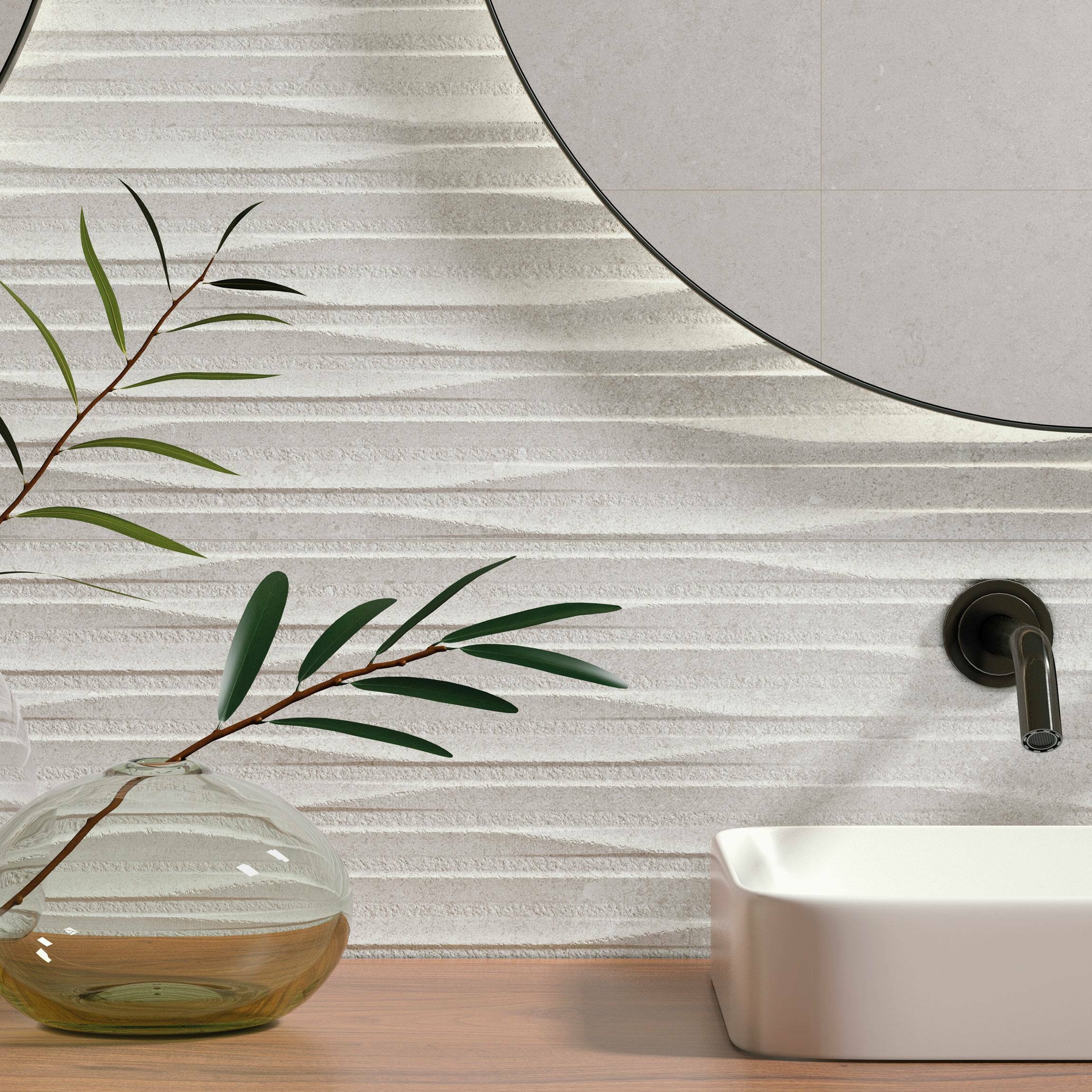
Wall tile colours affect interior space perception by regulating light reflection, visual depth, boundary definition, spatial scale, and emotional balance across residential interiors. Colour selection determines how walls visually advance or recede. Tonal value shapes brightness distribution. Contrast control defines spatial order. Coordinated colour systems optimise perceived size and clarity.
Light Reflection
Interior brightness increases when light-coloured wall tiles reflect higher levels of natural and artificial light. White, off-white, and pale neutrals improve illumination distribution. Higher reflectance reduces shadow density. Brighter walls increase perceived openness.
Spatial Scale
Perceived room size changes when wall tile colour modifies visual boundaries. Light colours push walls visually outward. Dark colours pull walls inward. Continuous light-coloured walls expand apparent room volume.
Depth Perception
Visual depth improves when controlled tonal variation creates layering effects on wall surfaces. Subtle shade transitions add dimension. Flat monotones reduce depth cues. Measured variation enhances interest without visual noise.
Ceiling Height
Perceived ceiling height improves when wall tile colours support vertical emphasis. Lighter upper wall colours increase height perception. Darker lower sections anchor the space. Vertical colour balance shapes proportion.
Visual Order
Interior calm strengthens when wall tile colour systems remain consistent across connected surfaces. Unified palettes reduce visual breaks. Repeated tones create cohesion. Consistency supports organised spatial reading.
Contrast Control
Spatial hierarchy improves when colour contrast remains controlled and intentional. Low contrast preserves continuity. Higher contrast defines feature zones. Disciplined contrast prevents clutter.
Emotional Tone
Interior atmosphere shifts when wall tile colours convey warmth or coolness. Warm neutrals create comfort-oriented spaces. Cool greys and whites signal modern restraint. Balanced temperature supports daily comfort.
Surface Emphasis
Wall prominence changes when colour saturation directs visual attention. Muted colours recede into background roles. Saturated colours create feature walls. Controlled emphasis maintains balance.
Cleanliness Perception
Perceived cleanliness improves when wall tile colours minimise stain visibility and visual disruption. Mid-tone neutrals mask minor marks. Extreme whites or darks reveal residue faster. Balanced colours reinforce hygiene cues.
What Surface Finishes Are Suitable For Wall Tiles Design?
Surface finishes suitable for wall tiles design balance cleanability, moisture resistance, light interaction, visual order, and long-term durability to maintain hygienic, stable, and aesthetically controlled interior wall surfaces. Finish selection influences how walls handle stains, humidity, cleaning, and light reflection. Correct finishes protect substrates and preserve interior quality.
Glazed
Wall hygiene and stain resistance improve when glazed finishes create an impermeable protective layer. Fired glazes block moisture and contaminants. Smooth surfaces wipe clean easily. Glazed finishes suit kitchens, bathrooms, and utility walls.
Matt
Visual calm and reduced glare improve when matt finishes diffuse light evenly across wall surfaces. Low reflectivity minimises shine hotspots. Soft texture supports modern interiors. Matt finishes suit living areas and feature walls.
Satin
Balanced light control improves when satin finishes combine soft sheen with easy cleanability. Moderate reflectivity enhances brightness without glare. Smooth faces resist staining. Satin finishes suit contemporary residential walls.
Polished
Brightness and visual sharpness increase when polished finishes reflect high levels of light. High gloss enhances decorative impact. Smooth surfaces clean easily. Polished finishes suit feature walls and low-contact areas only.
Textured
Surface depth and character increase when textured finishes add controlled relief to wall surfaces. Raised patterns create visual interest. Texture enhances feature zones. Controlled use prevents dust and residue accumulation.
Lappato
Modern visual depth improves when lappato finishes combine partial polish with retained micro-texture. Semi-reflective surfaces add dimension. Controlled sheen avoids excessive gloss. Lappato finishes suit accent walls.
Natural-Look
Material authenticity improves when natural-look finishes replicate stone or wood textures accurately. Textural detail enhances realism. Porcelain bodies maintain low porosity. Natural-look finishes suit modern and luxury interiors.
Glassy
Light amplification improves when glassy finishes reflect and distribute illumination efficiently. High reflectance enhances brightness. Non-porous surfaces resist stains. Glassy finishes suit splash zones and decorative panels.
How Does Wall Tiles Design Vary By Room Function?
Wall tiles design varies by room function because moisture exposure, cleaning frequency, impact risk, hygiene requirements, and visual priorities differ across residential interior spaces. Functional zoning dictates material choice. Finish selection aligns with exposure level. Tile size and layout support room-specific performance. Correct variation ensures durability, hygiene, and visual order in every interior zone.
Bathrooms
Moisture Control And Hygiene Performance Drive Wall Tiles Design In Bathrooms. Low-porosity porcelain and ceramic tiles prevent water absorption. Smooth or satin finishes support frequent cleaning. Larger wall tiles reduce grout exposure. Full-height coverage protects substrates from steam and splashes.
Kitchens
Stain resistance and easy cleanability define wall tiles design in kitchens. Glazed porcelain or ceramic tiles resist grease and food splashes. Smooth finishes allow fast wipe-down. Medium to large formats minimise joints around splash zones. Wall tiles prioritise hygiene and brightness near worktops.
Living Rooms
Visual order and aesthetic longevity guide wall tiles design in living areas. Decorative porcelain, stone-effect, or wood-effect tiles enhance surface character. Matt or satin finishes reduce glare. Larger formats create calm, uninterrupted wall planes. Design emphasis remains on visual balance rather than moisture protection.
Dining Areas
Surface durability and visual harmony shape wall tiles design in dining spaces. Stain-resistant finishes protect against food splashes. Neutral or warm colour systems support comfort. Coordinated wall tiles align with adjacent living zones to maintain continuity.
Bedrooms
Calm atmosphere and low maintenance influence wall tiles design in bedrooms. Decorative feature walls use porcelain or ceramic tiles with matt finishes. Soft colour palettes support relaxation. Tile application remains selective to preserve visual calm.
Hallways And Corridors
Impact resistance and visual continuity define wall tiles design in circulation areas. Durable porcelain tiles resist scuffing. Medium to large formats reduce joint density. Neutral tones maintain consistency across connected spaces.
Utility And Laundry Rooms
Moisture resistance and chemical stability govern wall tiles design in utility areas. Low-absorption tiles protect walls from water and detergents. Smooth glazed finishes simplify cleaning. Full-height tiling supports functional durability.
Entryways
Surface protection and cleanability drive wall tiles design at entry points. Porcelain wall tiles resist dirt transfer. Stain-resistant finishes support frequent cleaning. Durable surfaces protect high-contact zones.
Feature Zones
Visual emphasis controls wall tiles design in feature areas. Textured, patterned, or mosaic tiles create focal points. Controlled use prevents clutter. Feature design complements functional wall systems.
What Wall Tile Layout Patterns Are Commonly Used In Interiors?
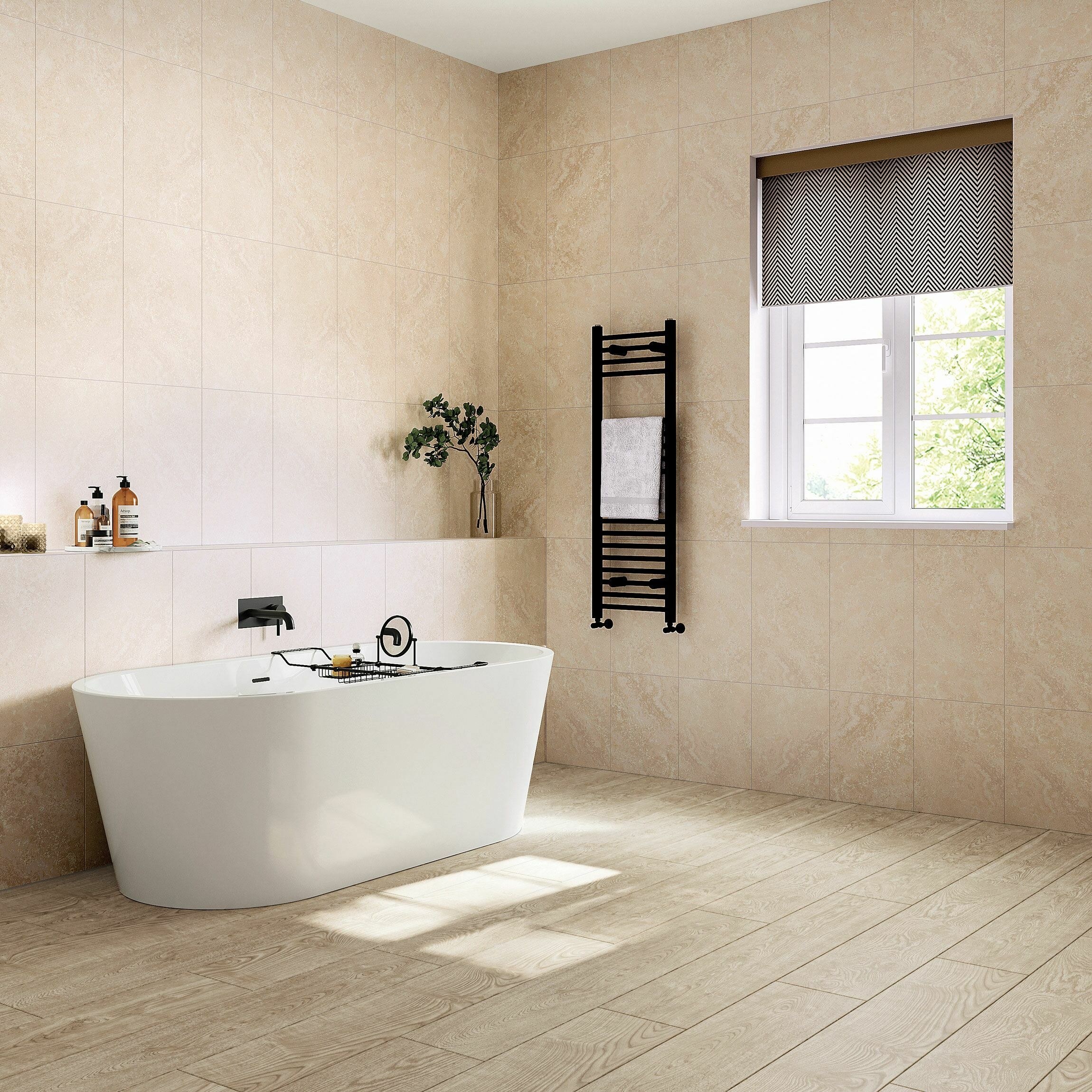
Wall tile layout patterns used in residential interiors establish visual order, directional emphasis, proportional balance, and long-term aesthetic clarity by controlling alignment, repetition, and surface rhythm across vertical planes. Layout geometry influences how walls are perceived in height, width, and depth. Pattern discipline prevents visual noise. Correct layout selection supports hygiene perception and interior cohesion.
Straight Lay
Visual order improves when wall tiles align in a uniform grid with continuous horizontal and vertical joints. Predictable geometry creates calm surfaces. Aligned joints reduce visual distraction. Straight lay patterns suit modern and minimal interiors.
Stacked Horizontal
Perceived wall width increases when rectangular tiles align horizontally with continuous joint lines. Linear repetition stretches visual boundaries. Horizontal stacking suits narrow rooms. This layout supports contemporary interior aesthetics.
Stacked Vertical
Perceived ceiling height improves when rectangular tiles stack vertically from floor to ceiling. Continuous vertical joints draw the eye upward. Narrow formats enhance height emphasis. Vertical stacking suits low-ceiling interiors.
Brick Bond
Surface movement appears when rectangular tiles offset by approximately 50 percent along their length. Staggered joints soften rigidity. Subtle rhythm adds visual interest. Brick bond layouts suit kitchens and feature walls.
Herringbone
Decorative emphasis increases when tiles interlock at angled orientations forming repeating v-shapes. Dynamic geometry introduces movement. Controlled use prevents clutter. Herringbone layouts suit accent and feature walls.
Chevron
Geometric precision emerges when angled tiles meet at consistent centre points. Symmetrical zig-zag lines create refinement. Directional clarity enhances focal walls. Chevron layouts suit luxury interior features.
Grid
Architectural calm strengthens when square tiles repeat evenly with consistent spacing. Predictable repetition supports traditional and transitional interiors. Uniform joints reinforce visual discipline. Grid layouts maintain balance.
Modular
Proportional balance improves when multiple tile sizes repeat in a structured sequence. Mathematical relationships create rhythm. Planned repetition avoids randomness. Modular layouts suit large wall surfaces.
Random Offset
Organic variation appears when rectangular tiles install with irregular joint offsets. Controlled randomness softens formality. Natural flow enhances stone-effect walls. Random offset layouts suit contemporary interiors.
How Does Wall Tiles Thickness Affect Performance And Durability?
Wall tiles thickness directly influences performance and durability by controlling impact resistance, structural rigidity, adhesive bond stability, crack prevention, moisture protection, and long-term surface integrity across residential interior walls. Thickness functions as a structural variable. Adequate material mass improves resistance to damage. Correct specification prevents premature failure and surface detachment.
Impact Resistance
Resistance to chipping and breakage improves when wall tiles maintain greater material thickness. Increased mass absorbs impact energy from accidental contact. Thicker tiles withstand knocks from fixtures and furniture. Improved impact tolerance extends wall lifespan.
Structural Stability
Wall surface stability improves when tile thickness reduces flexing under load and environmental change. Rigid tiles maintain consistent shape. Reduced movement lowers stress on adhesives. Stable surfaces preserve bond strength over time.
Crack Prevention
Stress distribution improves when wall tiles possess sufficient thickness to bridge minor substrate imperfections. Greater thickness reduces stress concentration. Hairline cracking occurs less frequently. Structural integrity remains intact.
Adhesive Bond Strength
Bond Reliability Increases When Tile Thickness Supports Uniform Adhesive Coverage. Adequate bedding depth ensures full contact. Even load transfer strengthens adhesion. Secure bonds reduce detachment risk.
Moisture Protection
Moisture resistance improves when thicker tiles provide increased material density. Dense bodies slow moisture transmission. Enhanced density supports waterproofing systems. Moisture protection improves in humid environments.
Wear Resistance
Surface longevity increases when material depth resists degradation from repeated cleaning and contact. Thicker tiles retain surface integrity longer. Finish wear occurs more slowly. Appearance stability improves.
Installation Accuracy
Installation quality improves when tile thickness allows better levelling and alignment control. Reduced lippage visibility enhances finish precision. Consistent thickness improves surface flatness. Accurate installation supports durability.
Acoustic Performance
Sound behaviour improves when thicker wall tiles reduce hollow resonance. Increased mass dampens vibration. Solid surfaces enhance perceived quality. Improved acoustics contribute to comfort.
Material Matching
Performance consistency improves when tile thickness aligns with material type and room exposure. Porcelain wall tiles perform optimally at higher thickness ranges. Ceramic wall tiles perform effectively at moderate thickness levels. Correct matching prevents structural mismatch.
How Does Grout Selection Influence Wall Tiles Design Results?

Grout selection influences wall tiles design results by controlling visual order, moisture protection, hygiene performance, joint stability, colour consistency, and long-term surface durability across residential interior walls. Grout acts as a structural and visual connector. Porosity determines stain risk. Colour affects surface continuity. Joint specification completes wall tiles design performance.
Visual Continuity
Surface cohesion improves when grout colour minimises contrast with wall tile surfaces. Colour-matched grout reduces visual segmentation. Low-contrast joints preserve clean wall planes. Consistent colour supports calm interior aesthetics.
Moisture Control
Wall protection improves when grout limits water absorption at joint lines. Low-porosity and epoxy grout block moisture ingress. Reduced absorption protects substrates. Moisture control remains critical in bathrooms and kitchens.
Hygiene Performance
Cleanliness standards improve when grout resists staining and bacterial retention. Smooth, low-absorption grout prevents residue buildup. Narrow joints reduce contamination zones. Hygienic grout supports frequent cleaning cycles.
Joint Stability
Structural reliability improves when grout maintains flexural strength and adhesion. Polymer-modified grout absorbs minor movement. Stable joints prevent cracking and tile edge damage. Joint integrity preserves wall longevity.
Joint Width
Visual refinement improves when joint width aligns with tile size and layout. Narrow joints below 3 mm reduce visual noise. Correct width prevents stress concentration. Dimensional accuracy supports clean finishes.
Colour Durability
Surface appearance remains stable when grout maintains colour under cleaning and light exposure. Epoxy and colour-stable grout prevent discolouration. Consistent colour preserves visual order. Durable colour supports long-term aesthetics.
Cleaning Effort
Maintenance efficiency improves when grout resists dirt and chemical degradation. Non-reactive grout tolerates cleaning agents. Smooth joints simplify wipe-down. Reduced maintenance supports practical living.
Pattern Definition
Design clarity improves when grout reinforces intended tile layout geometry. Straight joints emphasise linear layouts. Controlled contrast highlights patterns selectively. Grout supports layout intent without disruption.
Room Zoning
Performance accuracy improves when grout selection matches room exposure levels. Bathrooms require moisture-resistant grout. Kitchens demand stain resistance. Living areas prioritise visual consistency.
How Does Wall Tiles Design Support Easy Cleaning And Maintenance?
Wall tiles design supports easy cleaning and maintenance by combining low-porosity materials, smooth and stable surface finishes, reduced grout exposure, and ordered layouts that minimise dirt retention and simplify daily care in residential interiors. Correct wall tile specification lowers cleaning effort. Stable surfaces resist staining. Integrated design preserves long-term appearance with minimal upkeep.
Low Porosity
Cleaning effort decreases when wall tile materials prevent liquid and contaminant absorption. Porcelain and glazed ceramic tiles maintain water absorption below 0.5%. Surface contamination remains superficial. Fast wipe-down restores cleanliness efficiently.
Smooth Finishes
Maintenance efficiency improves when wall tile finishes remain smooth and chemically stable. Glazed, satin, and light matt finishes resist grease and soap residue. Smooth faces prevent build-up. Quick cleaning supports high-use areas.
Reduced Grout Exposure
Upkeep time reduces when tile size selection limits joint length and width. Large-format wall tiles reduce grout exposure by approximately 30–35%. Narrow joints below 3 mm collect less dirt. Fewer joints simplify maintenance.
Stain Resistance
Surface appearance remains clean when wall tiles resist oils, soaps, and household stains. Chemically stable glazes prevent discolouration. Frequent cleaning causes no surface degradation. Stain resistance reduces corrective effort.
Colour Stability
Perceived cleanliness improves when wall tile colours conceal minor marks and wear. Mid-tone and neutral colours mask residue effectively. Stable pigmentation prevents fading. Visual consistency supports low-effort care.
Grout Specification
Joint maintenance improves when grout resists absorption and discolouration. Epoxy or low-porosity grout blocks staining. Smooth joints wipe clean easily. Correct grout selection reduces long-term maintenance demand.
Layout Discipline
Cleaning speed improves when wall tile layouts maintain straight alignment and predictable geometry. Straight-lay and stacked patterns avoid dirt traps. Aligned joints support efficient wipe paths. Disciplined layouts simplify care.
Chemical Tolerance
Surface longevity improves when wall tiles tolerate regular cleaning agents. Fired ceramic and porcelain finishes resist detergents and disinfectants. No surface breakdown occurs. Chemical stability supports routine maintenance.
Coverage Strategy
Maintenance effort reduces when wall tiles protect high-contact and splash zones fully. Full-height tiling shields walls from stains and moisture. Continuous coverage replaces absorbent finishes. Protected walls require less repair.
What Wall Tiles Design Factors Improve Long-Term Durability?

Long-term wall durability improves when wall tiles design prioritises dense materials, correct thickness, stable surface finishes, low porosity, accurate grout specification, and function-led layout planning across residential interiors. Performance-led specification prevents premature wear. Structural alignment protects substrates. Integrated design sustains wall integrity over extended use.
Material Density
Wall surface longevity increases when tile bodies maintain high density and low internal voids. Porcelain tiles absorb below 0.5% water. Dense structures resist cracking and chipping. Material density defines long-term stability.
Tile Thickness
Structural durability improves when wall tiles maintain adequate thickness for vertical fixing. Thickness above 8 mm increases rigidity. Reduced flexing protects adhesive bonds. Correct thickness prevents detachment over time.
Surface Finish Stability
Wear resistance improves when finishes resist polishing, etching, and chemical degradation. Glazed, matt, and satin finishes retain surface integrity. Stable finishes preserve appearance under frequent cleaning.
Low Water Absorption
Moisture-related failure reduces when wall tiles block liquid penetration completely. Low absorption prevents internal damage. Dry tile bodies protect substrates. Moisture control extends wall lifespan.
Grout Specification
Joint durability increases when grout resists moisture, staining, and movement stress. Epoxy and polymer-modified grout maintain strength. Narrow joints below 3 mm reduce stress concentration. Correct grout prevents joint breakdown.
Layout Accuracy
Surface integrity improves when layouts minimise excessive cuts and weak edges. Straight-lay and stacked patterns distribute stress evenly. Precise alignment reduces chipping risk.
Adhesive Compatibility
Bond reliability improves when tile design aligns with suitable adhesives and substrates. Dense tiles require high-performance adhesives. Full coverage improves load transfer. Correct compatibility prevents failure.
Impact Resistance
Wall protection improves when tile selection withstands accidental contact and abrasion. Dense porcelain resists knock damage. Impact tolerance preserves surface condition.
Colour And Pattern Control
Visual longevity increases when design avoids high-contrast and trend-dependent patterns. Neutral palettes age predictably. Low-contrast designs conceal minor wear. Timeless appearance delays replacement.
Room Zoning
Durability improves when wall tiles design matches exposure level by room function. Bathrooms require moisture resistance. Kitchens demand stain control. Living areas focus on impact and visual stability.
What Common Mistakes Reduce Wall Tiles Design Effectiveness?
Wall tiles design effectiveness reduces when material choice, size planning, finish selection, grout specification, layout logic, and room zoning fail to align with moisture exposure, cleaning frequency, and visual order requirements of interior walls. Design errors weaken durability. Visual mistakes disrupt coherence. Technical mismatches increase maintenance demand. Effective wall tiles design depends on system accuracy rather than isolated choices.
Incorrect Material Selection
Wall performance declines when tile materials lack low porosity and chemical stability. High-absorption tiles stain easily. Weak materials crack under minor impact. Incorrect material choice accelerates surface degradation.
Inappropriate Finish Choice
Usability reduces when surface finishes ignore cleaning and glare control needs. Highly textured finishes trap dirt. Excessively glossy finishes highlight streaks. Finishing mismatches increases maintenance effort.
Poor Tile Size Planning
Visual order weakens when tile size conflicts with wall scale and room proportion. Oversized tiles overwhelm small walls. Small tiles increase grout density unnecessarily. Poor sizing fragments surfaces visually.
Excessive Grout Exposure
Hygiene and appearance suffer when grout width and frequency remain high. Wide joints collect residue. High joint density increases cleaning effort. Incorrect grout planning reduces wall cleanliness.
Wrong Grout Selection
Long-term performance declines when grout absorbs moisture and stains. High-porosity grout discolours quickly. Inflexible grout cracks at joints. Poor grout choice undermines wall durability.
Inconsistent Layout Alignment
Visual clarity reduces when layouts lack straight alignment and repetition. Misaligned joints create visual noise. Irregular spacing disrupts order. Layout inconsistency weakens interior cohesion.
Overuse Of Patterns
Interior calm declines when multiple patterns compete on wall surfaces. Excessive patterning creates clutter. Strong contrasts overwhelm perception. Over-design reduces long-term relevance.
Ignoring Room Function
Performance accuracy drops when wall tiles design ignores exposure level by room. Bathrooms require moisture protection. Kitchens require stain resistance. Uniform specification causes functional mismatch.
Poor Edge And Trim Detailing
Durability reduces when tile edges and corners lack proper finishing. Exposed edges chip easily. Unsealed corners allow moisture ingress. Detail neglect shortens lifespan.
Trend-Led Design Decisions
Long-term effectiveness declines when short-lived trends drive tile selection. Bold colours age quickly. Complex patterns lose relevance. Trend dependence increases renovation frequency.
How Does Wall Tiles Design Align With Modern And Luxury Interiors?

Wall tiles design aligns with modern and luxury interiors by delivering visual restraint, material authenticity, dimensional precision, controlled light interaction, and long-term surface performance across residential vertical spaces. Modern and luxury interiors prioritise clarity over ornamentation. Clean planes signal refinement. Precise detailing communicates quality. Performance stability sustains premium perception over time.
Surface Simplicity
Visual refinement increases when wall surfaces remain calm, continuous, and minimally segmented. Large-format wall tiles reduce grout density by approximately 30–35%. Straight and stacked layouts preserve alignment. Reduced visual noise supports modern and luxury spatial language.
Material Authenticity
Luxury perception strengthens when wall tiles replicate natural materials with high visual accuracy. Stone-effect porcelain mirrors authentic veining logic. Concrete-effect tiles deliver controlled tonal variation. Wood-effect porcelain reproduces realistic grain scale without moisture risk.
Dimensional Precision
Interior proportion improves when tile dimensions align precisely with architectural geometry. Oversized wall formats create expansive planes. Consistent sizing reduces cut frequency. Dimensional discipline signals construction accuracy and premium finish quality.
Controlled Reflectivity
Visual sophistication improves when surface finishes manage light without excessive glare. Matt and satin finishes diffuse illumination evenly. High-gloss remains limited to feature zones. Balanced reflectivity enhances depth and comfort.
Colour Restraint
Timeless elegance emerges when wall tile colour systems remain neutral and cohesive. Monochromatic palettes enhance continuity. Warm neutrals convey understated richness. Limited contrast preserves calm and long-term relevance.
Pattern Discipline
Architectural clarity strengthens when layout geometry follows strict repetition and alignment. Straight-lay and vertical stack patterns maintain order. Complex patterns remain confined to accents. Disciplined pattern use supports luxury interiors.
Seamless Continuity
High-end presence increases when wall surfaces transition without visual interruption. Continuous tiling across feature zones unifies planes. Coordinated wall and floor tones extend spatial flow. Reduced breaks enhance openness.
Detail Precision
Craft quality becomes evident when joints, edges, and finishes remain exact. Narrow joints below 3 mm reduce segmentation. Colour-matched grout preserves continuity. Precise detailing communicates refinement.
Performance Longevity
Authentic luxury endures when wall tiles maintain appearance and function over extended use. Dense materials resist staining and wear. Stable finishes conceal ageing. Low-maintenance performance protects long-term luxury value.
How Does Wall Tiles Design Support Sustainable Interior Construction?
Wall tiles design supports sustainable interior construction by reducing material waste, extending surface lifespan, improving indoor environmental quality, lowering maintenance resource use, and minimising renovation frequency through durable, inert, and performance-led vertical surface systems. Sustainability outcomes depend on lifecycle efficiency. Dense materials reduce replacement demand. Correct sizing limits waste. Stable finishes lower cleaning inputs. Integrated wall tiles design delivers measurable environmental benefits in residential interiors.
Material Longevity
Environmental impact reduces when wall tiles deliver extended service life without degradation. Porcelain wall tiles achieve lifespans exceeding 20–30 years. Water absorption below 0.5% prevents structural breakdown. Long lifespan reduces raw material extraction and manufacturing cycles.
Waste Reduction
Construction waste decreases when wall tile size and layout planning minimise cutting and offcuts. Large-format wall tiles reduce cut frequency by approximately 10–15%. Optimised layouts improve installation efficiency. Lower waste supports resource-efficient interior construction.
Indoor Air Quality
Healthier interiors result when wall tile materials remain chemically inert and non-emissive. Fired ceramic and porcelain tiles emit zero volatile organic compounds. Non-porous surfaces resist mould growth. Stable materials protect indoor environmental quality.
Water Efficiency
Household water use decreases when wall surfaces require minimal cleaning effort. Low-porosity tiles resist staining. Smooth finishes allow fast wipe-down. Reduced scrubbing lowers water and detergent consumption.
Chemical Reduction
Environmental load reduces when wall tiles resist stains without aggressive cleaning agents. Chemically stable glazes prevent deep contamination. Mild cleaners maintain hygiene. Reduced chemical dependency supports sustainable living.
Renovation Cycle Reduction
Environmental pressure decreases when wall tile design delays refurbishment timelines. Neutral colour systems avoid aesthetic obsolescence. Durable finishes resist visual ageing. Fewer renovations reduce disposal volume and embodied energy loss.
Recyclable Composition
Circular construction potential improves when wall tile materials support recycling pathways. Ceramic and porcelain tiles use natural mineral compositions. Broken tiles re-enter aggregate reuse streams. Material compatibility supports circular economy principles.
Performance Zoning
Material efficiency strengthens when wall tile performance matches room exposure precisely. Bathrooms use moisture-resistant systems. Kitchens use stain-resistant surfaces. Correct zoning prevents premature failure and resource waste.
Installation Efficiency
Energy and resource use reduces when wall tile systems install cleanly and accurately. Consistent tile thickness improves adhesive efficiency. Reduced rework saves materials. Installation accuracy supports sustainable build practices.
Summing Up
Effective wall tiles design for residential interiors delivers lasting value when performance, durability, and visual order guide every design decision rather than short-term aesthetic preference.
Dense, low porosity materials protect walls from moisture, staining, and repeated cleaning exposure. Correct tile size and thickness improve structural stability, joint control, and long-term surface integrity. Stable surface finishes support easy cleaning, light control, and consistent appearance over time. Disciplined colour systems and layout geometry maintain visual calm, spatial balance, and aesthetic longevity. Accurate grout selection enhances hygiene performance, moisture blocking, and joint durability.
Room specific wall tiles design ensures correct performance in bathrooms, kitchens, living areas, and circulation spaces. When wall tiles design operates as an integrated system across material, size, finish, colour, layout, thickness, and grout, residential interiors achieve low maintenance, sustainable construction outcomes, modern and luxury alignment, and long-term interior surface reliability.
