

Wall panels are engineered wall-covering systems used across residential, commercial, and exterior applications in the UAE to improve surface durability, moisture resistance, acoustic performance, thermal stability, fire safety compliance, and architectural consistency while enabling faster installation and controlled maintenance over long service lifespans.
These systems use prefabricated materials such as PVC, MDF, WPC, gypsum, acoustic composites, stone-effect surfaces, metal sheets, and fibre cement boards to cover walls efficiently and uniformly. Wall panels are used in living rooms, bedrooms, bathrooms, kitchens, offices, hospitality interiors, healthcare facilities, retail spaces, high-traffic corridors, and building facades. Performance varies by environment, with moisture-stable systems supporting wet areas, acoustic constructions reducing reverberation in enclosed spaces, and exterior-grade assemblies resisting heat, UV exposure, and humidity.
Design variation of wall panels includes flat, slatted, geometric, three-dimensional, perforated, natural-effect, and bespoke surface patterns. Colour availability covers white, light grey, beige, wood tones, dark grey, black, blue, green, red, metallic finishes, and custom palettes. Size, thickness, and weight of wall panels ranges from lightweight decorative formats to heavy exterior cladding systems. Installation occurs over prepared substrates or existing tiles using adhesive, mechanical, or hybrid fixing methods.
Compared with traditional finishes, these wall panels deliver faster installation, fewer joints, improved hygiene, and lower long-term maintenance when material selection aligns with moisture exposure, acoustic demand, fire rating requirements, structural load limits, and climatic conditions specific to the UAE. Cost of wall panels varies by material performance and installation scope, while long service life depends on correct specification, certified installation, and application-specific planning within a single, coherent wall-covering system.
What Are Wall Panels?
Wall panels are manufactured wall-covering systems installed over interior or exterior wall surfaces to protect the underlying structure, improve functional performance, and deliver consistent architectural finishes in residential and commercial buildings.
These systems consist of pre-engineered boards or sheets fixed to concrete, masonry, or drywall substrates. The structure improves surface durability by reducing abrasion, impact damage, and moisture penetration. Thermal performance improves through reduced heat transfer across wall assemblies, which is critical for high-temperature environments common in the UAE. Acoustic performance improves through lower sound reflection and reverberation in enclosed spaces. Design consistency increases by enabling uniform textures, colours, and finishes across large wall areas in hospitality, retail, office, and residential developments.

What Is the History of Wall Panels?
Wall panels evolved from early protective wall linings into engineered construction systems through material innovation, architectural standardisation, and industrial manufacturing, progressing from ancient civilisations to contemporary modular building practices.
Origins in Ancient Civilisations
Ancient wall panels served as protective and decorative linings constructed from stone and timber to shield masonry walls and improve interior conditions. Ancient Egyptian architecture used carved stone slabs in temples and palaces to protect structural walls from erosion and surface damage. Roman construction adopted timber linings to reduce moisture exposure and thermal discomfort inside stone buildings. These early systems combined surface protection with visual hierarchy and material symbolism.
Expansion During the Medieval Period
Medieval wall panels developed as timber panelling systems designed to enhance insulation and interior refinement within large stone structures. European castles, churches, and manor houses applied oak and pine panelling to reduce cold transfer from masonry walls. Decorative carving reflected craftsmanship and social rank while insulation remained the primary functional driver in unheated interiors.
Transformation Through Industrialisation
Industrialisation converted wall panels into mass-produced construction materials supporting faster and standardised building processes. Nineteenth-century manufacturing introduced plywood and gypsum boards with uniform dimensions. Consistent sizing reduced installation time and labour dependency. These materials enabled scalable urban development and repeatable interior wall finishes.
Evolution in Modern Construction
Modern wall panels function as engineered systems combining structural cores, surface finishes, and performance layers to meet durability and climate requirements. Post-1945 construction demand accelerated prefabrication adoption across residential and commercial projects. Contemporary systems integrate composite materials, moisture-resistant layers, and acoustic treatments, supporting large-scale developments in high-temperature environments such as the UAE.
What Are Different Types of Wall Panels?
Different types of wall panels are classified by material composition, performance function, and installation context, covering decorative enhancement, acoustic absorption, moisture resistance, fire performance, thermal insulation, structural support, and exterior protection for residential, commercial, and architectural buildings.
The classification of wall panel types is given below.
Decorative Wall Panels
Decorative wall panels improve interior surface appearance through controlled textures, colours, and finishes while providing basic resistance against abrasion and minor impact. Common materials include MDF, laminate, PVC, gypsum, and engineered wood. Typical applications include feature walls, living rooms, bedrooms, retail interiors, and hospitality environments.
Acoustic Wall Panels
Acoustic wall panels reduce sound reflection and reverberation by absorbing mid- and high-frequency noise within enclosed spaces. Materials include PET felt, mineral fibre, perforated MDF, fabric-wrapped panels, and wood slat systems with acoustic backing. Usage includes offices, meeting rooms, restaurants, cinemas, studios, and educational facilities.
Moisture-Resistant Wall Panels
Moisture-resistant wall panels prevent water absorption, surface swelling, and mould formation in high-humidity or wet environments. Materials include PVC panels, aluminium composite panels, compact laminate, FRP sheets, and moisture-treated gypsum boards. Installation areas include bathrooms, kitchens, utility rooms, and coastal buildings.
Fire-Resistant Wall Panels
Fire-resistant wall panels limit flame spread and smoke development to improve fire safety performance in enclosed spaces. Materials include fire-rated gypsum boards, calcium silicate panels, mineral fibre boards, and certified fire-rated composite systems. These panels support regulatory compliance in commercial and high-occupancy buildings.
Thermal Insulated Wall Panels
Thermal insulated wall panels reduce heat transfer through wall assemblies to stabilise indoor temperatures and lower cooling demand. Panel systems incorporate insulation cores such as EPS, XPS, PIR, or mineral wool. These panels suit buildings exposed to sustained solar gain and elevated external temperatures.
Wood and Wood-Effect Wall Panels
Wood and wood-effect wall panels deliver natural or timber-inspired aesthetics with improved dimensional stability and installation uniformity. Options include solid timber panels, veneer panels, WPC panels, laminate wood finishes, and engineered wood systems. Applications focus on residential interiors and commercial feature walls.
Stone and Stone-Effect Wall Panels
Stone and stone-effect wall panels replicate natural stone appearance while reducing structural load and installation complexity. Variants include lightweight stone veneers, porcelain slab panels, engineered stone panels, and composite stone systems. Usage includes lobbies, reception areas, and luxury interiors.
Metal Wall Panels
Metal wall panels provide high durability, impact resistance, and contemporary architectural finishes for interior and exterior use. Materials include aluminium, stainless steel, galvanised steel, and aluminium composite panels. These panels suit façades, commercial interiors, industrial spaces, and high-traffic zones.
PVC and Plastic Wall Panels
PVC and plastic wall panels offer lightweight construction, water resistance, and low-maintenance performance across functional spaces. Formats include interlocking PVC panels, polymer laminate sheets, and composite plastic panels. Typical installations include wet areas, healthcare facilities, and service rooms.
3D and Textured Wall Panels
3D and textured wall panels create surface depth and visual articulation through geometric or sculpted designs. Materials include gypsum, MDF, PVC, and composite polymers. These panels appear primarily on feature walls in hospitality, retail, and high-end residential interiors.
Exterior Wall Panels and Cladding Systems
Exterior wall panels act as protective cladding systems engineered to resist UV exposure, wind loads, thermal expansion, and environmental wear. Materials include fibre cement boards, aluminium composite panels, high-pressure laminates, ceramic façade panels, and stone cladding systems. These panels protect building envelopes in demanding climates such as the UAE.
Structural Insulated Panels
Structural insulated panels combine load-bearing capacity with integrated thermal insulation to support fast and energy-efficient construction. These panels consist of rigid insulation cores bonded between structural boards. Applications include modular buildings and prefabricated construction systems.
What Materials Are Used in Wall Panels?

Wall panels use a range of natural, engineered, and composite materials selected for durability, moisture resistance, acoustic control, thermal performance, fire safety, and surface stability across interior and exterior building applications.
The primary wall panel material categories are defined below.
Wood and Engineered Wood Materials
Wood-based wall panels use natural timber or engineered composites to deliver structural stability and decorative finishes. Common materials include solid wood, plywood, MDF, HDF, veneer-faced boards, and wood plastic composite. These materials provide dimensional consistency, controlled expansion, and surface uniformity for interior wall applications.
Gypsum-Based Materials
Gypsum wall panels use calcium sulphate cores to deliver fire resistance, smooth finishes, and controlled moisture performance. Gypsum boards, fire-rated gypsum panels, and moisture-resistant gypsum variants dominate interior construction due to predictable performance and ease of installation.
PVC and Polymer Materials
PVC and polymer wall panels use synthetic compounds to deliver water resistance, low maintenance, and lightweight installation. Materials include rigid PVC sheets, plastic laminates, FRP panels, and composite polymers. These panels suit high-humidity environments such as bathrooms, kitchens, and service areas.
Metal Materials
Metal wall panels use aluminium or steel alloys to deliver impact resistance, corrosion control, and modern architectural finishes. Common options include aluminium sheets, stainless steel panels, galvanised steel, and aluminium composite panels. These materials support both interior design and exterior cladding systems.
Stone and Mineral Materials
Stone-based wall panels use natural or engineered mineral surfaces to deliver durability and premium aesthetics with reduced structural load. Materials include natural stone veneers, engineered stone panels, porcelain slabs, and fibre cement boards. These systems balance visual mass with installation efficiency.
Fabric and Felt Materials
Fabric and felt wall panels use absorptive surfaces to control sound reflection and reverberation in enclosed spaces. Materials include PET felt, mineral wool-backed fabric panels, and acoustic textile composites. These panels target acoustic performance rather than structural reinforcement.
Composite and Insulated Core Materials
Composite wall panels use layered construction to combine surface durability with thermal or acoustic insulation. Core materials include EPS, XPS, PIR, PUR, and mineral wool bonded between rigid facings. These systems improve energy efficiency and environmental performance.
Cementitious Materials
Cement-based wall panels use reinforced cement matrices to deliver moisture resistance, dimensional stability, and exterior durability. Fibre cement boards and cement-bonded particle boards support façade systems and high-exposure environments.
What Are the Advantages of Wall Panels?
Wall panels deliver comprehensive performance benefits across durability, efficiency, environmental control, compliance, and design execution, supporting long-term wall protection, faster construction cycles, controlled indoor conditions, and consistent architectural outcomes for residential and commercial buildings.
Improve Structural Surface Protection
Improve structural surface protection by forming a protective barrier that limits abrasion, impact damage, surface cracking, and finish deterioration on underlying wall substrates. Rigid facings absorb daily wear. Substrate exposure reduces significantly in high-contact environments.
Accelerate Construction Timelines
Accelerate construction timelines through factory-finished systems that reduce on-site curing, drying, and multi-trade sequencing. Prefabricated formats increase installation speed. Project delivery becomes more predictable across large-scale developments.
Enhance Thermal Efficiency
Enhance thermal efficiency by reducing conductive and radiant heat transfer across wall assemblies using layered construction or insulated cores. Indoor temperature stability improves. Cooling load intensity decreases in high-temperature regions such as the UAE.
Strengthen Acoustic Performance
Strengthen acoustic performance by lowering sound reflection and reverberation within enclosed spaces using absorptive or perforated surface structures. Speech clarity improves. Noise transfer reduces across offices, hospitality venues, and residential interiors.
Increase Moisture and Humidity Resistance
Increase moisture and humidity resistance by preventing water ingress, condensation damage, and microbial growth on wall surfaces. Non-porous materials retain dimensional stability. Surface integrity remains consistent in bathrooms, kitchens, and coastal environments.
Support Fire Safety Compliance
Support fire safety compliance by limiting flame spread, smoke development, and heat transmission when fire-rated systems are used. Certified materials assist regulatory adherence. Risk mitigation improves in high-occupancy and commercial buildings.
Deliver Design Precision and Consistency
Deliver design precision and consistency through controlled manufacturing that ensures uniform textures, colours, and surface alignment across large wall areas. Visual continuity improves. Design intent remains intact across multiple rooms or units.
Reduce Long-Term Maintenance Costs
Reduce long-term maintenance costs by minimising repainting, resurfacing, and repair frequency through durable and cleanable surface systems. Localised replacement simplifies upkeep. Lifecycle expenditure remains controlled.
Enable Design Flexibility
Enable design flexibility by offering multiple material finishes, surface textures, thicknesses, and performance grades within a single wall system category. Architectural creativity expands. Functional requirements remain uncompromised.
Improve Hygiene and Cleanability
Improve hygiene and cleanability by providing smooth, non-absorbent surfaces that resist staining and simplify routine cleaning processes. Surface sanitation improves in healthcare, hospitality, and food-related environments.
Optimise Space Utilisation
Optimise space utilisation by reducing the need for thick wet finishes while maintaining performance through slim-profile panel systems. Usable floor area increases marginally. Interior layouts remain efficient.
Support Sustainable Construction Practices
Support sustainable construction practices through material efficiency, reduced site waste, and compatibility with recyclable or low-emission components. Manufacturing precision lowers material loss. Environmental impact reduces over the building lifecycle.
What Are the Disadvantages or Limitations of Wall Panels?

Wall panels present specific limitations related to initial cost, installation dependency, surface repair complexity, material sensitivity, and design constraints, which affect suitability depending on building use, wall condition, and environmental exposure.
Higher Initial Material Cost
Higher initial material cost occurs due to factory manufacturing, specialised finishes, and performance-enhancing layers compared to basic paint or plaster finishes. Premium materials such as acoustic, fire-rated, or composite panels increase upfront expenditure despite long-term value.
Dependence on Proper Substrate Preparation
Dependence on proper substrate preparation affects installation quality and long-term performance. Uneven walls, moisture-damaged surfaces, or weak fixings reduce panel alignment and stability. Additional preparation increases labour scope.
Limited On-Site Modifications
Limited on-site modifications restrict flexibility once panels are manufactured or installed. Cutting, resizing, or altering finished panels risks surface damage and finish inconsistency. Design changes after installation remain difficult.
Repair and Replacement Complexity
Repair and replacement complexity increases when damage occurs to individual panels within continuous installations. Matching colours, textures, or batches proves challenging. Full panel replacement often becomes necessary instead of localised patch repairs.
Moisture and Heat Sensitivity for Certain Materials
Moisture and heat sensitivity affects performance for specific material categories such as MDF, natural wood, and low-grade laminates. Prolonged humidity or heat exposure causes swelling, warping, or surface degradation without proper material selection.
Reduced Breathability of Wall Surfaces
Reduced breathability of wall surfaces occurs when impermeable panels restrict moisture vapour transmission. Trapped condensation increases risk of mould development behind panels in poorly ventilated environments.
Design Constraints in Traditional Interiors
Design constraints appear in traditional or heritage interiors where panelled finishes conflict with architectural authenticity. Visual integration challenges arise in spaces requiring period-specific finishes.
Installation Skill Requirement
Installation skill requirement increases due to alignment precision, fixing accuracy, and material-specific handling needs. Improper installation leads to visible gaps, uneven joints, or premature failure.
Weight and Load Considerations
Weight and load considerations limit use on lightweight partitions or weak substrates. Stone, cement-based, or composite panels require structural assessment before installation.
Environmental Impact of Synthetic Materials
Environmental impact increases when panels use non-recyclable plastics, resins, or high-embodied-energy composites. Sustainability performance depends on material sourcing and lifecycle management.
Where Can Wall Panels Be Used?
Wall panels are used across residential, commercial, and exterior environments to provide surface protection, moisture resistance, acoustic control, thermal stability, hygiene, and design consistency, with room-specific wall panel systems selected according to functional load, environmental exposure, and usage intensity.
Living Room Wall Panels
Living room wall panels improve visual consistency, acoustic comfort, and impact resistance in primary living spaces. Feature wall panels behind televisions or seating zones reduce sound reflection, protect wall substrates from abrasion, and maintain uniform interior finishes.
Bedroom Wall Panels
Bedroom wall panels enhance acoustic absorption, surface durability, and visual calm within sleeping areas. Headboard wall panels and full-height bedroom wall panels reduce noise transfer and lower repainting frequency.
Bathroom Wall Panels
Bathroom wall panels prevent water ingress, mould growth, and surface degradation in wet and high-humidity environments. Waterproof wall panels made from PVC, compact laminate, or composite materials replace tiles in shower enclosures and vanity walls.
Kitchen Wall Panels
Kitchen wall panels protect wall surfaces from heat, grease, moisture, and staining in food preparation areas. Splashback wall panels use non-porous materials to maintain hygiene and simplify cleaning.
Hallway and Corridor Wall Panels
Hallway wall panels and corridor wall panels reduce impact damage and surface wear in high-traffic circulation zones. Durable finishes limit scuffing and minimise long-term maintenance requirements.
Office Wall Panels
Office wall panels improve acoustic control, surface durability, and professional interior presentation. Meeting room wall panels and reception wall panels reduce reverberation and visual deterioration in shared workspaces.
Retail and Showroom Wall Panels
Retail wall panels support brand presentation while resisting continuous public interaction. Feature display wall panels and showroom wall panels maintain surface integrity under high footfall conditions.
Hotel and Hospitality Wall Panels
Hotel wall panels enhance acoustic comfort, fire safety performance, and design consistency across hospitality interiors. Guest room wall panels, corridor wall panels, and lobby wall panels support durability and regulatory compliance.
Healthcare Wall Panels
Healthcare wall panels improve hygiene control, cleanability, and surface resilience in clinical environments. Hospital wall panels and clinic wall panels use non-porous materials to support sanitation protocols.
Exterior Wall Panels
Exterior wall panels function as cladding systems that protect building façades from heat, UV exposure, wind loads, and environmental wear. Façade wall panels preserve envelope performance in high-temperature climates such as the UAE.
Can Wall Panels Be Used in Bathrooms and Wet Areas?

Wall panels are suitable for bathrooms and wet areas when manufactured from water-resistant or waterproof materials designed to withstand humidity, direct water exposure, and temperature variation without swelling, delamination, or surface degradation.
Bathroom wall panels use non-porous materials such as PVC, compact laminate, aluminium composite, and fibre-reinforced polymer to block water penetration. These wall panels replace tiles in shower enclosures, vanity walls, and full-height wet zones. Surface joints use sealed fixing systems to prevent moisture ingress behind panels. Smooth finishes improve hygiene by reducing grout lines where mould develops. Material selection depends on splash exposure level, ventilation rate, and wall substrate condition.
How Do Wall Panels Compare to Tiles?
Wall panels differ from tiles in installation speed, surface continuity, maintenance demand, moisture management, and design flexibility, with wall panels offering seamless coverage and faster fitting while tiles provide modular rigidity and traditional finishes.
Installation Speed and Complexity
Wall panels install faster than tiles due to large-format coverage and reduced fixing steps. Panels cover wider wall areas per installation cycle. Tiles require individual placement, spacing, grouting, and curing, which increases labour time and project duration.
Surface Continuity and Joints
Wall panels create continuous wall surfaces with minimal joints, while tiles introduce multiple grout lines across the installation. Reduced joints limit dirt accumulation and moisture ingress. Tiled surfaces rely on grout integrity for long-term performance.
Maintenance and Cleaning
Wall panels require lower maintenance due to smooth, non-porous surfaces that resist staining and mould growth. Tiles demand periodic grout cleaning and resealing. Panel systems simplify hygiene management in bathrooms and kitchens.
Moisture and Water Resistance
Wall panels provide consistent moisture resistance when manufactured from waterproof materials, while tiles rely on grout and substrate waterproofing. Panel systems reduce failure points. Tile installations depend heavily on correct sealing and ongoing upkeep.
Design Flexibility and Visual Impact
Wall panels offer broader design flexibility through large patterns, textures, and uninterrupted finishes, while tiles provide modular design repetition. Panels support wood, stone, and textured effects without pattern breaks. Tiles emphasise grid-based layouts.
Repair and Replacement
Tiles allow individual unit replacement, while wall panel repairs often involve replacing full sections. Localised tile damage repairs remain simpler. Panel damage requires batch matching to maintain visual consistency.
Cost Structure Over Lifecycle
Wall panels show lower long-term maintenance costs, while tiles often present lower initial material costs. Reduced cleaning and repair frequency offsets panel investment over time. Tile systems accumulate maintenance costs through grout care and repairs.
How Are Wall Panels Installed?
Wall panels are installed through a sequential installation process that includes substrate preparation, layout planning, fixing system application, panel alignment, joint sealing, and finish inspection to achieve structural stability, moisture control, and long-term surface performance.
Wall Surface Preparation
Wall surface preparation creates a stable, dry, and level base required for accurate wall panel installation. Surface assessment identifies moisture presence, structural cracks, and uneven sections. Surface correction improves fixing strength and finish alignment across the wall area.
Measurement and Layout Planning
Measurement and layout planning define panel positioning, joint alignment, and cutting points before installation begins. Accurate marking reduces material waste and ensures consistent visual flow. Layout sequencing supports symmetrical installation and clean edge termination.
Fixing System Application
Fixing system application secures wall panels to the substrate using adhesives, mechanical fasteners, concealed clips, or hybrid fixing methods based on material type and exposure conditions. Wet areas require moisture-resistant adhesives and sealed fixing points to maintain water protection.
Panel Placement and Alignment
Panel placement and alignment ensure straight edges, uniform spacing, and surface continuity across the installation area. Installation follows a defined reference line such as floor level or corner edge. Continuous alignment checks prevent cumulative deviation.
Joint Sealing and Edge Finishing
Joint sealing and edge finishing prevent moisture ingress and visual discontinuity between adjacent panels. Sealants, trims, or interlocking profiles create controlled transitions. Sealed joints remain critical in bathrooms and high-humidity environments.
Final Inspection and Surface Cleaning
Final inspection and surface cleaning confirm panel stability, fixing integrity, and finish quality before area handover. Adhesive residue removal and surface cleaning complete the installation. Performance verification supports long-term durability and appearance retention.
What Shapes Do Wall Panels Come In?

Wall panels are manufactured in standardised and decorative shapes designed to support installation efficiency, surface coverage, and architectural expression, including flat formats, linear profiles, modular units, and sculpted geometries used across interior and exterior wall applications.
Flat Rectangular Panels
Flat rectangular panels represent the most common wall panel shape, designed for full-wall coverage and surface uniformity. These panels install vertically or horizontally. Usage dominates residential interiors, commercial walls, and exterior façades due to ease of alignment and minimal material waste.
Square Panels
Square wall panels provide modular installation and balanced visual repetition across feature walls and decorative applications. Equal dimensions support grid-based layouts. These panels appear frequently in decorative and 3D wall panel systems.
Slatted and Linear Panels
Slatted wall panels and linear wall panels use elongated vertical or horizontal profiles to create rhythm, depth, and directional emphasis. Narrow strips install in parallel sequences. Applications include acoustic wall panels, feature walls, and contemporary interior designs.
Plank-Style Panels
Plank-style wall panels replicate timber board proportions to create natural linear aesthetics with controlled alignment. Long rectangular planks suit wood-effect and WPC wall panels. These shapes support staggered or continuous layouts.
3D Geometric Panels
3D geometric wall panels feature sculpted shapes such as waves, hexagons, pyramids, and angular reliefs to introduce surface depth and shadow variation. These panels serve decorative and architectural feature wall applications.
Hexagonal and Polygon Panels
Hexagonal and polygon wall panels offer modular geometric layouts that enable custom patterns and visual segmentation. Interlocking shapes allow flexible composition. These formats appear in modern decorative and acoustic wall panel systems.
Curved and Flexible Panels
Curved wall panels accommodate rounded walls, columns, and architectural transitions through flexible or pre-formed shapes. Materials include flexible MDF, PVC, and composite polymers. These panels support non-linear wall designs.
Custom-Cut Panels
Custom-cut wall panels allow project-specific shapes to match architectural drawings and design intent. CNC cutting produces bespoke forms. Usage appears in branded interiors, hospitality feature walls, and statement architectural elements.
What Sizes Do Wall Panels Come In?
Wall panels are produced in standardised and custom dimensions to maximise surface coverage, installation efficiency, and design precision, with size variation determined by wall panel material, application type, and performance requirement across interior and exterior wall systems.
Large-Format Wall Panel Sizes
Large-format wall panels use wide and tall dimensions to reduce joint frequency and accelerate installation across large wall areas. Common dimensions include 2400 × 1200 mm, 2700 × 1200 mm, and 3000 × 1200 mm. Usage appears in commercial interiors, hospitality projects, and full-height residential walls.
Medium Modular Wall Panel Sizes
Medium modular wall panels balance handling efficiency with layout flexibility for residential and decorative wall applications. Standard dimensions include 1200 × 600 mm, 1000 × 500 mm, and 600 × 600 mm. Grid-based and staggered layouts commonly apply these wall panel sizes.
Small Decorative and Feature Wall Panel Sizes
Small wall panels support decorative and 3D feature wall designs requiring surface segmentation and pattern repetition. Typical dimensions range from 300 × 300 mm to 500 × 500 mm. Installation focuses on geometric, textured, and accent wall compositions.
Slatted and Linear Wall Panel Sizes
Slatted and linear wall panels use elongated proportions to create vertical or horizontal rhythm and depth. Common lengths range between 2400 mm and 3000 mm, with widths from 100 mm to 300 mm depending on acoustic backing and surface design.
Plank-Style Wall Panel Sizes
Plank-style wall panels replicate timber board proportions using long, narrow formats for wood-effect installations. Common dimensions include 2400 × 150 mm, 2400 × 200 mm, and 3000 × 180 mm. Application appears frequently in WPC and engineered wood wall panels.
Wall Panel Thickness Ranges
Wall panels are manufactured in multiple thickness ranges based on structural, acoustic, or insulation performance requirements. Typical thickness values include 6–8 mm for PVC wall panels, 9–12 mm for MDF and laminate wall panels, and 15–25 mm for acoustic or insulated systems.
Custom Wall Panel Sizes
Custom wall panel sizes match architectural drawings and site-specific wall dimensions for precise installation outcomes. CNC cutting enables exact sizing for feature walls, full-height installations, curved surfaces, and branded interior applications.
What Finishes Are Available for Wall Panels?
Wall panels are available in wood-effect, stone-effect, matte, gloss, textured, metallic, fabric, concrete, printed, and exterior-grade finishes, each designed to control appearance, durability, maintenance level, and environmental resistance across interior and exterior wall applications.
Wood-Effect Finishes
Wood-effect wall panel finishes replicate natural timber grain and colour while maintaining dimensional stability and moisture resistance. Common finishes include oak, walnut, teak, and grey-toned wood effects.
Stone-Effect Finishes
Stone-effect wall panel finishes reproduce natural stone visuals with reduced weight and simplified installation. Popular options include marble, travertine, slate, limestone, and concrete effects.
Matte Finishes
Matte wall panel finishes provide low-reflection surfaces that reduce glare and emphasise colour consistency. Application suits modern residential interiors and commercial environments.
Gloss and High-Gloss Finishes
Gloss wall panel finishes create reflective surfaces that enhance brightness and visual depth. Usage appears in kitchens, bathrooms, and contemporary interior spaces.
Textured and 3D Finishes
Textured and 3D wall panel finishes introduce surface depth through sculpted, fluted, or geometric relief patterns. Feature walls commonly use these finishes.
Metallic Finishes
Metallic wall panel finishes deliver industrial and contemporary aesthetics with high surface durability. Finishes include brushed aluminium, stainless steel, bronze, and copper effects.
Fabric and Soft-Touch Finishes
Fabric wall panel finishes improve acoustic absorption while adding tactile softness to interior spaces. Applications include offices, hotels, cinemas, and meeting rooms.
Concrete and Industrial Finishes
Concrete wall panel finishes replicate raw architectural surfaces with controlled uniformity. These finishes suit modern residential and commercial interiors.
Decorative Printed Finishes
Decorative printed wall panel finishes enable custom patterns, graphics, and branded visuals. Retail and hospitality interiors frequently apply these finishes.
Exterior-Grade Finishes
Exterior wall panel finishes resist UV exposure, heat variation, and environmental wear. Common finishes include UV-stable laminates, fibre cement textures, and weather-resistant composite coatings.
What Is the Average Weight of Wall Panels?

The average weight of wall panels ranges from 3 kg/m² to 45 kg/m², determined by wall panel material density, thickness, core composition, and functional application across interior and exterior wall systems.
Lightweight Wall Panel Weight Range
Lightweight wall panels weigh between 3 kg/m² and 8 kg/m² and prioritise ease of handling and rapid installation. Materials in this range include PVC wall panels, polymer-based decorative panels, and thin laminate systems commonly used in bathrooms, kitchens, and residential interiors.
Medium-Weight Wall Panel Weight Range
Medium-weight wall panels weigh between 8 kg/m² and 20 kg/m² and balance durability with manageable structural load. Typical materials include MDF wall panels, wood-effect panels, gypsum-based panels, and acoustic wall panels used in living rooms, bedrooms, offices, and hospitality spaces.
Heavy Wall Panel Weight Range
Heavy wall panels weigh between 20 kg/m² and 45 kg/m² and deliver high durability, impact resistance, and exterior performance. Examples include stone wall panels, porcelain slab panels, fibre cement panels, and metal wall panels applied to feature walls and façades.
Factors Influencing Wall Panel Weight
Wall panel weight varies based on material density, panel thickness, core structure, and surface finish. Insulated cores increase thickness without proportional weight gain. Cementitious and stone materials significantly increase load demands. Substrate strength and fixing method selection depend directly on panel weight.
How Thick Are Wall Panels?
Wall panels are manufactured in thickness ranges between 4 mm and 50 mm, with thickness selection determined by wall panel material type, core structure, and required performance functions such as decoration, moisture resistance, acoustic absorption, insulation, or structural reinforcement.
Thin Wall Panel Thickness Range
Thin wall panels measure between 4 mm and 8 mm and prioritise lightweight construction and surface finishing efficiency. Common materials include PVC wall panels, laminate wall panels, and decorative polymer panels used in bathrooms, kitchens, and low-impact interior areas.
Standard Wall Panel Thickness Range
Standard wall panels range from 8 mm to 12 mm and provide balanced rigidity, durability, and installation practicality. Typical materials include MDF wall panels, wood-effect wall panels, gypsum-based panels, and compact laminate panels applied in living rooms, bedrooms, offices, and retail interiors.
Thick Performance Wall Panel Thickness Range
Thick performance wall panels measure between 12 mm and 25 mm and deliver improved structural stability and functional performance. Acoustic wall panels, fire-rated wall panels, and reinforced composite panels fall within this category.
Insulated and Structural Wall Panel Thickness Range
Insulated and structural wall panels range from 25 mm to 50 mm depending on insulation core depth and load-bearing requirements. Structural insulated panels and exterior wall panel systems use thicker profiles to improve thermal resistance and façade durability.
Factors Influencing Wall Panel Thickness
Wall panel thickness varies based on material density, core composition, performance requirements, and installation conditions. Acoustic absorption, fire resistance, and thermal insulation increase required thickness. Interior space constraints and substrate type influence final thickness selection.
What Designs Are Available for Wall Panels?
Wall panels are available in flat, slatted, geometric, 3D, patterned, natural-effect, industrial, fabric-based, and bespoke architectural designs, each engineered to control visual rhythm, surface depth, acoustic behaviour, and spatial character across interior and exterior wall applications.
Flat Wall Panel Designs
Flat wall panel designs create smooth, uninterrupted wall surfaces that emphasise colour consistency and architectural clarity. These designs support minimal interiors, large wall spans, and uniform visual flow in residential and commercial environments.
Slatted Wall Panel Designs
Slatted wall panel designs use repeated linear elements arranged vertically or horizontally to introduce rhythm, depth, and directional emphasis. These designs commonly appear in acoustic wall panels, living room wall panels, and contemporary feature walls.
Geometric Wall Panel Designs
Geometric wall panel designs use repeated shapes such as squares, rectangles, and hexagons to form modular surface patterns. These designs enable controlled repetition and layout customisation on decorative and feature walls.
3D Wall Panel Designs
3D wall panel designs introduce surface relief through sculpted forms that create shadow variation and depth perception. Common formats include waves, flutes, ribs, and angular profiles used in hospitality and statement interiors.
Patterned Wall Panel Designs
Patterned wall panel designs incorporate engraved, embossed, or printed motifs to add visual complexity and stylistic identity. These designs include abstract patterns, architectural repeats, and decorative surface graphics.
Wood and Natural-Effect Wall Panel Designs
Wood and natural-effect wall panel designs replicate timber grain, stone veining, or concrete texture with controlled material stability. These designs balance organic appearance with engineered performance for interior wall applications.
Fabric and Acoustic Wall Panel Designs
Fabric wall panel designs combine textile surfaces with acoustic backing to reduce sound reflection and soften interior environments. These designs appear in offices, hotels, cinemas, and meeting spaces.
Industrial Wall Panel Designs
Industrial wall panel designs use concrete-effect, metal-effect, or raw textured finishes to support contemporary architectural themes. These designs suit commercial interiors and modern residential spaces.
Bespoke and Custom Wall Panel Designs
Bespoke wall panel designs use CNC cutting and project-specific layouts to meet architectural drawings and branding requirements. These designs enable unique feature walls and tailored interior compositions.
What Patterns Do Wall Panels Feature?

Wall panels feature linear, geometric, three-dimensional relief, modular, organic, natural-effect, perforated, and bespoke patterns that control visual rhythm, surface depth, acoustic behaviour, and architectural emphasis across interior and exterior wall panel applications.
Linear Wall Panel Patterns
Linear wall panel patterns create directional emphasis using repeated vertical or horizontal elements such as slats, flutes, ribs, and grooves. These patterns increase perceived height or width and support acoustic diffusion in modern interiors.
Geometric Wall Panel Patterns
Geometric wall panel patterns form structured visual order through repeated shapes arranged in modular layouts. Common shapes include squares, rectangles, hexagons, diamonds, and polygon grids used on feature and decorative wall panels.
Three-Dimensional Relief Wall Panel Patterns
Three-dimensional wall panel patterns introduce raised or recessed surfaces that generate shadow contrast and spatial depth. Typical relief forms include waves, chevrons, cubes, pyramids, and angular facets used in statement wall designs.
Modular and Repetitive Wall Panel Patterns
Modular wall panel patterns use uniform units repeated in consistent sequences to achieve surface continuity. Grid-based repetition supports scalable coverage across residential and commercial wall panel installations.
Organic and Flowing Wall Panel Patterns
Organic wall panel patterns use curved and fluid geometries to soften architectural lines and reduce visual rigidity. Flowing contours and wave-based motifs appear frequently in hospitality and leisure interiors.
Natural-Effect Wall Panel Patterns
Natural-effect wall panel patterns replicate wood grain, stone veining, and cement textures with controlled surface consistency. Examples include oak grain, walnut grain, marble veining, and concrete-effect wall panels.
Perforated and Acoustic Wall Panel Patterns
Perforated wall panel patterns improve sound absorption and diffusion through repeated holes or slots. Common formats include circular perforations, linear slots, and staggered acoustic arrays used in offices and auditoriums.
Bespoke and Decorative Wall Panel Patterns
Besppoke wall panel patterns use engraved, embossed, or CNC-generated designs to meet architectural or branding specifications. Custom patterning enables project-specific feature wall execution while maintaining wall panel system performance.
What Colours Are Wall Panels Available In?
Wall panels are available in neutral, natural, dark, light, bold, and metallic colour ranges, with colour selection controlling light reflection, spatial perception, visual contrast, and architectural consistency across interior wall panel applications.
White
White wall panels maximise light reflection and visual openness within interior spaces. Common variants include pure white, off-white, ivory, and cream. Usage concentration remains high in living room wall panels, bedroom wall panels, and office wall panels due to neutrality and brightness control.
Grey
Grey wall panels provide tonal balance while maintaining modern architectural character. Common shades include pearl grey, ash grey, and cement grey. Application frequency remains high in contemporary residential and commercial interiors.
Dark Grey
Dark grey wall panels create depth and contrast for feature wall applications. Popular tones include charcoal, graphite, and anthracite. Usage focuses on accent walls and hospitality interiors.
Black
Black wall panels deliver strong architectural definition and visual contrast. Application remains limited to feature walls and statement zones due to low light reflectance.
Beige
Beige wall panels introduce warm neutrality that softens interior environments. Common tones include sand, stone beige, and cream beige. Usage appears frequently in bedrooms, corridors, and hospitality interiors.
Brown
Brown wall panels replicate natural timber aesthetics and organic warmth. Typical shades include oak brown, walnut brown, teak, and dark wood tones used primarily in wood-effect wall panels.
Yellow
Yellow wall panels add controlled brightness and visual energy in accent applications. Common tones include soft yellow, mustard, and warm amber used selectively on feature walls.
Green
Green wall panels deliver calming and natural visual effects. Popular shades include sage green, olive green, forest green, and emerald used in residential and hospitality interiors.
Blue
Blue wall panels support calm, focused, and professional interior environments. Common shades include navy blue, steel blue, and muted teal used in offices and bedrooms.
Red
Red wall panels create strong focal emphasis through high visual intensity. Typical tones include deep red, burgundy, and terracotta used in limited accent applications.
Metallic Colours
Metallic wall panels provide reflective industrial aesthetics for architectural emphasis. Common colours include silver, brushed aluminium, bronze, copper, champagne gold, and gunmetal.
Are Wall Panels Water Resistant?

Wall panels are water resistant when manufactured from non-porous or moisture-stable materials such as PVC, compact laminate, aluminium composite, fibre-reinforced polymer, or sealed composite systems designed to block water absorption and surface degradation.
Water-Resistant Wall Panel Materials
Water-resistant wall panels use materials with low water absorption rates below 1% by volume under standard moisture exposure testing. Common materials include PVC wall panels, compact laminate panels, aluminium composite panels, FRP panels, and moisture-treated gypsum systems.
Wall Panels Suitable for Wet Areas
Wall panels perform effectively in bathrooms, kitchens, and wet areas when combined with sealed joints and compatible fixing systems. Shower walls, vanity backs, splash zones, and utility walls benefit from continuous, non-grouted surfaces that limit moisture ingress.
Materials That Are Not Water Resistant
Some wall panels are not water resistant due to hygroscopic material composition. MDF wall panels, untreated wood panels, and low-grade laminates absorb moisture and swell when exposed to humidity without protective coatings.
Conditions Affecting Water Resistance
Wall panel water resistance depends on material selection, edge sealing quality, joint treatment, and installation accuracy. Performance remains stable when waterproof materials and sealed systems are used in high-humidity environments.
Do Wall Panels Have a Fire Rating?
Wall panels have a fire rating when manufactured from fire-resistant materials and tested under recognised fire performance standards, with ratings varying by core composition, surface material, and intended interior or exterior application.
Fire-Rated Wall Panel Materials
Fire-rated wall panels use non-combustible or limited-combustibility materials to reduce flame spread and heat release. Common materials include fire-rated gypsum boards, calcium silicate panels, mineral fibre panels, fibre cement boards, and certified fire-rated composite panels.
Fire Performance Classifications
Wall panel fire ratings are classified based on reaction-to-fire behaviour such as flame spread, smoke production, and heat contribution. Ratings are assigned following laboratory testing under regional and international building fire standards applicable to commercial and high-occupancy buildings.
Wall Panels Without Fire Ratings
Some wall panels do not carry fire ratings due to combustible material composition. Untreated wood panels, standard MDF panels, and decorative polymer panels lack inherent fire resistance without additional fire-retardant treatment.
Factors Influencing Fire Rating Performance
Wall panel fire performance depends on material density, core structure, surface coatings, fixing method, and installation system. Fire-rated performance remains valid only when panels are installed according to tested system specifications.
Can Wall Panels Be Installed Over Tiles?
Wall panels are installed over tiles when existing tiled surfaces remain flat, dry, structurally bonded, and free from movement, enabling wall panel systems to act as overlay finishes without tile removal in interior renovation projects.
Surface Conditions Required for Tile Overlay Installation
Wall panel installation over tiles requires stable tile adhesion, intact grout lines, and surface level variation below 3 mm per linear metre. Loose tiles, hollow spots, cracked grout, or trapped moisture reduce fixing reliability and long-term wall panel performance.
Fixing Systems Used Over Tiled Walls
Wall panels installed over tiles use high-bond construction adhesives, mechanical fasteners, or hybrid fixing systems based on panel weight and tile substrate strength. Lightweight PVC wall panels rely on adhesive bonding. Medium-weight wall panels use combined fixing methods.
Wall Panel Types Suitable for Installation Over Tiles
Lightweight wall panels perform best over tiled surfaces due to reduced load transfer and simpler fixing requirements. Suitable examples include PVC wall panels, laminate wall panels, and compact laminate wall panel systems. Heavy stone panels require substrate removal.
Limitations of Installing Wall Panels Over Tiles
Wall panel installation over tiles increases finished wall thickness and transfers structural dependency to existing tile adhesion quality. Poor tile bonding increases failure risk. Precise levelling remains essential for surface alignment and joint consistency.
How Long Do Wall Panels Last?
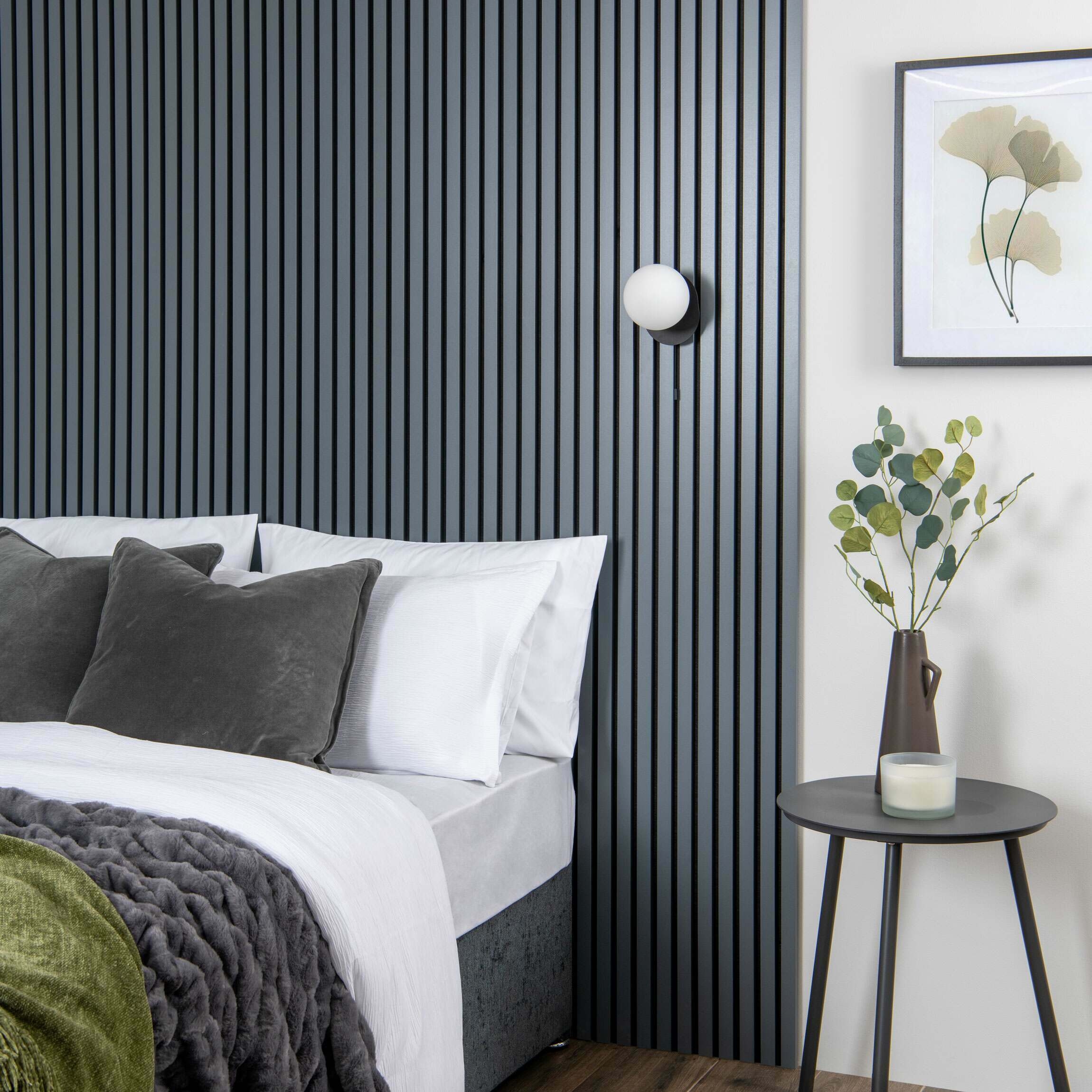
Wall panels last between 10 and 40 years depending on wall panel material, installation quality, environmental exposure, and maintenance intensity, with interior wall panels averaging 15–25 years and exterior-grade wall panels reaching 30–40 years under controlled conditions.
Lifespan of PVC and Polymer Wall Panels
PVC wall panels last 15–25 years due to low water absorption below 1% and resistance to humidity-related degradation. Application in bathrooms and kitchens extends lifespan when sealed joints and stable substrates are present.
Lifespan of MDF and Wood-Effect Wall Panels
MDF and wood-effect wall panels last 10–20 years in dry interior environments with controlled humidity levels. Exposure to moisture above 65% relative humidity reduces dimensional stability and service life.
Lifespan of Gypsum-Based Wall Panels
Gypsum wall panels last 20–30 years when protected from continuous moisture exposure and physical impact. Fire-rated gypsum panels maintain structural integrity longer in regulated commercial interiors.
Lifespan of Acoustic Wall Panels
Acoustic wall panels last 15–25 years depending on surface fabric durability and core density stability. Performance retention depends on dust control and mechanical damage prevention.
Lifespan of Exterior Wall Panels
Exterior wall panels last 25–40 years when manufactured from fibre cement, aluminium composite, or high-pressure laminate materials. UV resistance, thermal expansion control, and fixing system integrity determine longevity in high-temperature climates.
Factors That Affect Wall Panel Lifespan
Wall panel lifespan depends on material density, thickness, fixing method, surface sealing, and environmental exposure. Correct installation and material-specific application extend service life significantly.
How Are Wall Panels Maintained and Cleaned?
Wall panels are maintained through routine surface cleaning, moisture control, and impact prevention, with maintenance requirements determined by wall panel material type, surface finish, and environmental exposure across interior and exterior applications.
Routine Cleaning of Wall Panels
Routine wall panel cleaning uses dry dusting or damp wiping to remove surface dust, stains, and residues without damaging finishes. Smooth wall panels require soft cloths or non-abrasive sponges. Mild pH-neutral detergents support stain removal on non-porous surfaces.
Cleaning Water-Resistant Wall Panels
Water-resistant wall panels tolerate regular damp cleaning due to low water absorption and sealed surfaces. PVC wall panels, compact laminate wall panels, and aluminium composite panels withstand moisture exposure during bathroom and kitchen cleaning routines.
Maintenance of Wood and Wood-Effect Wall Panels
Wood and wood-effect wall panels require controlled humidity and dry cleaning to preserve surface stability. Excess water exposure causes swelling or surface degradation. Microfibre cloths and low-moisture cleaners protect finishes.
Maintenance of Acoustic Wall Panels
Acoustic wall panels require dry cleaning methods to preserve sound-absorbing performance. Vacuum cleaning with soft brush attachments removes dust from fabric and perforated surfaces. Liquid cleaners reduce acoustic efficiency.
Stain and Damage Management
Wall panel maintenance includes immediate stain removal and impact prevention to avoid permanent surface damage. Sharp objects and abrasive cleaners degrade surface coatings. Localised panel replacement resolves irreversible damage.
Long-Term Maintenance Practices
Long-term wall panel maintenance relies on periodic inspection of joints, fixings, and seals to maintain performance. Sealant integrity prevents moisture ingress. Fixing stability preserves alignment and surface continuity.
Do Wall Panels Improve Acoustic Performance?
Wall panels improve acoustic performance by absorbing and diffusing sound energy, reducing reverberation time by 20–60% depending on wall panel material, thickness, perforation density, and backing composition in enclosed interior environments.
How Acoustic Wall Panels Improve Sound Control
Acoustic wall panels reduce sound reflection by converting airborne sound energy into low-level thermal energy through porous or fibrous structures. PET felt wall panels achieve Noise Reduction Coefficient values between 0.65 and 0.85. Mineral wool–backed wall panels reach NRC values up to 0.95 within speech-frequency ranges.
Which Wall Panels Provide Acoustic Improvement
Acoustic performance improvement occurs in wall panels engineered with perforations, slatted profiles, or fabric-wrapped absorptive cores. Common examples include slatted wood acoustic wall panels, perforated MDF wall panels, fabric acoustic panels, and felt wall panels used in offices, hotels, and commercial interiors.
Spaces Where Acoustic Wall Panels Are Most Effective
Acoustic wall panels deliver the highest performance in enclosed spaces with hard reflective surfaces. Offices, meeting rooms, restaurants, cinemas, classrooms, and hotel corridors show measurable reductions in echo and improved speech clarity after acoustic wall panel installation.
Factors Influencing Acoustic Performance of Wall Panels
Acoustic effectiveness depends on wall panel thickness, backing material density, air gap depth, and perforation ratio. Thicker wall panels combined with rear air cavities increase low-frequency absorption and overall sound control efficiency.
How Much Do Wall Panels Cost in the UAE?

Wall panels in the UAE cost between AED 60 per m² and AED 2,300 per panel, with price variation determined by wall panel material, thickness, surface finish, acoustic or fire performance, and installation complexity across interior and exterior applications.
Cost of PVC Wall Panels in the UAE
PVC wall panels in the UAE cost between AED 60 and AED 150 per m² for material-only options. Installed PVC wall panel systems typically range from AED 120 to AED 250 per m² due to adhesive, trims, and labour inclusion. Usage concentrates in bathrooms and kitchens.
Cost of MDF and Decorative Wall Panels in the UAE
MDF and decorative wall panels cost between AED 180 and AED 400 per m² depending on surface finish and thickness. Wood-effect and textured decorative wall panels fall within this range and dominate living room and bedroom wall applications.
Cost of Acoustic Wall Panels in the UAE
Acoustic wall panels in the UAE cost between AED 250 and AED 600 per m² based on NRC rating, panel thickness, and backing composition. Slatted acoustic wall panels and fabric-backed systems occupy the upper range due to sound absorption performance.
Cost of WPC and Wood Wall Panels in the UAE
WPC and engineered wood wall panels cost between AED 300 and AED 700 per m² depending on profile depth and surface treatment. Natural wood wall panels exceed AED 800 per m² due to material sourcing and finishing requirements.
Cost of Stone-Effect and Porcelain Wall Panels in the UAE
Stone-effect and porcelain wall panels cost between AED 350 and AED 900 per m² based on slab thickness and surface realism. Lightweight stone veneer panels remain lower than full porcelain slab wall systems.
Cost of Exterior Wall Panels in the UAE
Exterior wall panels cost between AED 450 and AED 1,200 per m² depending on UV resistance, wind-load rating, and fixing system. Fibre cement, aluminium composite, and HPL façade panels dominate this category.
Factors That Influence Wall Panel Pricing in the UAE
Wall panel pricing depends on material density, panel size, thickness, performance rating, and installation scope. Custom designs, fire-rated certification, acoustic backing, and curved wall applications increase total cost.
What Wall Panel Styles Are Trending in the UAE?
Contemporary wood-effect, textured 3D, slatted linear, stone-effect, minimalist matte, and acoustically engineered wall panels are trending in the UAE due to demand for warm interiors, spatial depth, sound management, and modern architectural expression in residential and commercial spaces.
Wood-Effect Wall Panels
Wood-effect wall panels are trending for warm, organic interiors that balance natural aesthetics with engineered durability. Common finishes include oak brown, walnut grain, and honey teak tones used in living room wall panels and bedroom wall panels.
Textured and 3D Wall Panels
Textured and 3D wall panels are trending to add surface depth and architectural interest. Wave, fluted, and geometric relief patterns create shadow play and visual hierarchy across feature walls in hospitality and luxury residential spaces.
Slatted Linear Wall Panels
Slatted linear wall panels are trending for contemporary rhythm and acoustic control. Vertical slats and horizontal ribbed profiles increase perceived ceiling height and support sound diffusion in offices, lounges, and media rooms.
Stone-Effect Wall Panels
Stone-effect wall panels are trending for premium aesthetics that mimic marble, travertine, and slate with reduced weight and maintenance. These finishes appear in lobbies, entrance walls, and retail feature zones.
Minimalist Matte Wall Panels
Minimalist matte wall panels are trending for smooth, low-reflection surfaces that support modern minimal interiors. Light grey and neutral beige matte finishes dominate living spaces and professional environments.
Acoustic Engineered Wall Panels
Acoustic engineered wall panels are trending due to increased focus on sound quality in enclosed spaces. Perforated and fabric-backed systems reduce reverberation in offices, meeting rooms, cinemas, and restaurants.
Metallic and Industrial Wall Panels
Metallic and industrial wall panels are trending for bold contemporary character with reflective and raw surface finishes. Brushed aluminium, gunmetal, and bronze tones appear in commercial interiors and high-end retail environments.
How Do You Choose the Right Wall Panels?
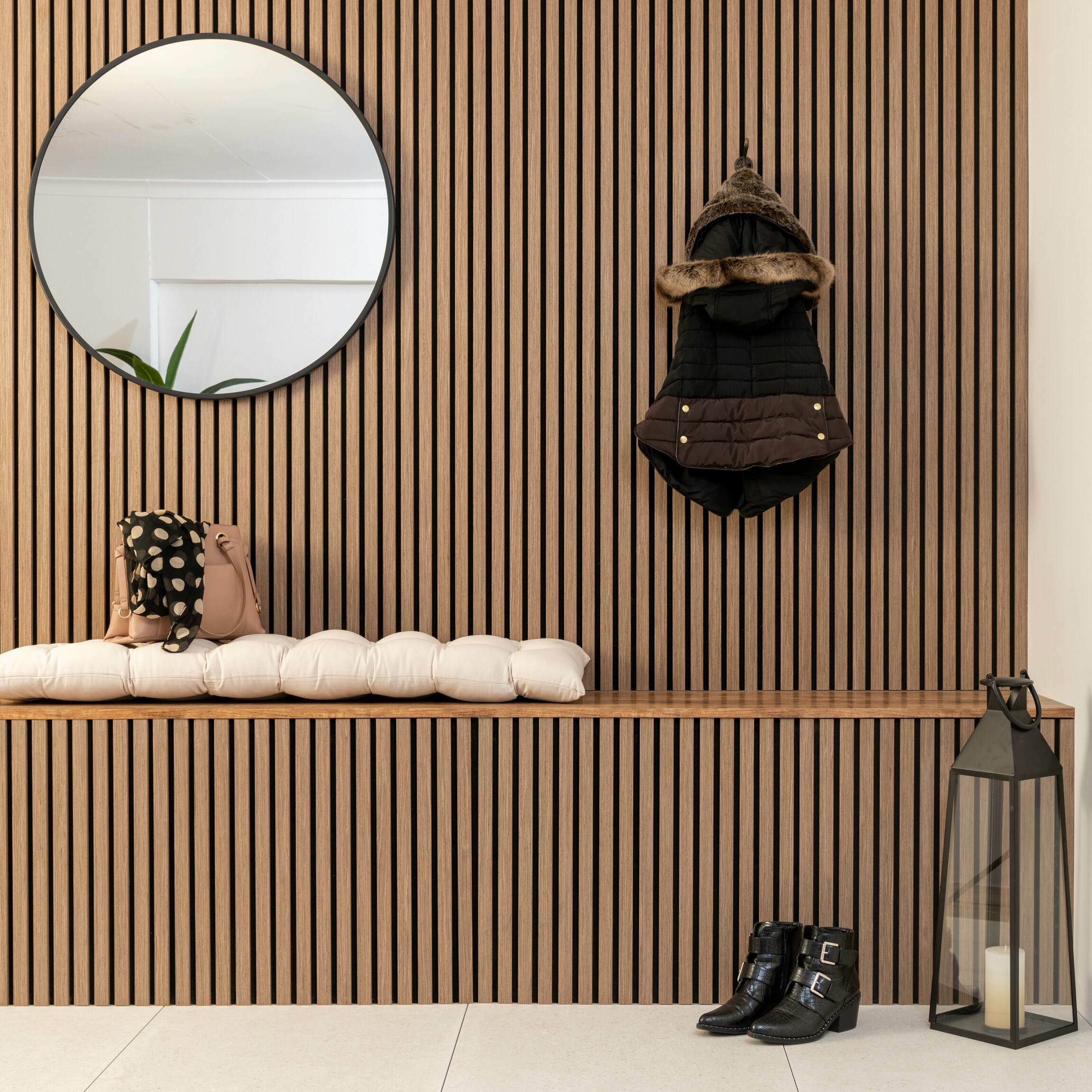
The right wall panels are chosen by matching wall panel material, performance properties, design style, and environmental exposure to the functional requirements of the space, ensuring durability, visual consistency, and long-term performance across interior or exterior wall applications.
Define the Application Area
Wall panel selection starts by identifying the application area such as living room wall panels, bedroom wall panels, bathroom wall panels, or exterior wall panels. Wet areas require water-resistant materials. High-traffic areas require impact-resistant surfaces. Exterior areas require UV and heat resistance.
Select the Appropriate Material
Wall panel material selection determines durability, moisture resistance, acoustic performance, and maintenance needs. PVC wall panels suit bathrooms and kitchens. MDF and wood-effect wall panels suit dry interiors. Acoustic wall panels suit offices and media rooms. Fibre cement and aluminium composite panels suit exterior façades.
Consider Environmental Conditions
Environmental exposure directly influences wall panel suitability. High humidity, temperature variation, and direct sunlight require moisture-stable and UV-resistant wall panel systems, especially relevant for UAE interiors and façades.
Choose the Required Performance Properties
Wall panel performance requirements include water resistance, acoustic absorption, fire rating, and thermal insulation. Acoustic wall panels improve sound control. Fire-rated wall panels support regulatory compliance. Insulated wall panels reduce heat transfer.
Match Design Style and Finish
Wall panel design selection aligns surface finish, colour, pattern, and texture with interior style objectives. Slatted wall panels support modern interiors. Stone-effect wall panels support luxury aesthetics. Matte finishes support minimalist spaces.
Check Wall Panel Dimensions and Thickness
Wall panel size and thickness influence installation method, visual scale, and structural load. Large-format wall panels reduce joints. Thicker panels improve acoustic and structural performance. Substrate strength determines allowable weight.
Evaluate Installation and Maintenance Requirements
Wall panel choice depends on installation complexity and long-term maintenance expectations. Lightweight panels install faster. Non-porous panels simplify cleaning. Replaceable systems reduce lifecycle maintenance impact.
Confirm Compliance and Safety Requirements
Wall panel selection requires verification of fire rating, material certification, and installation system compatibility. Commercial and hospitality spaces require certified fire-performance wall panels installed according to tested systems.
What Common Mistakes Should Be Avoided When Choosing Wall Panels?
Common mistakes when choosing wall panels include incorrect material selection, ignoring environmental exposure, overlooking fire and acoustic performance, misjudging panel weight and thickness, and prioritising appearance over functional suitability, leading to reduced lifespan, higher maintenance, and performance failure.
Choosing Wall Panels Without Considering the Application Area
Selecting wall panels without matching material performance to the application area causes premature surface degradation. Bathroom wall panels require water resistance. Living room wall panels prioritise durability and design. Exterior wall panels require UV and heat resistance.
Ignoring Moisture and Humidity Conditions
Ignoring moisture and humidity levels leads to swelling, warping, and surface failure in hygroscopic materials. MDF wall panels and untreated wood panels fail in environments exceeding 65% relative humidity, which is common in kitchens and bathrooms.
Overlooking Fire Rating Requirements
Overlooking fire rating requirements creates compliance and safety risks in commercial and high-occupancy buildings. Fire-rated wall panels remain mandatory in offices, hotels, corridors, and public spaces under UAE building regulations.
Focusing Only on Appearance
Prioritising visual design over functional performance results in unsuitable wall panel selection. Decorative finishes without impact resistance fail in high-traffic areas. Acoustic performance absence increases noise issues in enclosed spaces.
Misjudging Wall Panel Weight and Thickness
Misjudging wall panel weight and thickness causes fixing failure and substrate stress. Heavy wall panels exceeding 25 kg/m² require structural assessment. Lightweight partitions limit allowable load.
Ignoring Acoustic Requirements
Ignoring acoustic performance reduces speech clarity and increases reverberation in enclosed environments. Offices, meeting rooms, and restaurants require acoustic wall panels with NRC values above 0.65 for effective sound control.
Selecting Incorrect Fixing Systems
Using incorrect fixing systems compromises wall panel stability and longevity. Adhesive-only installation fails for medium and heavy wall panels. Mechanical fixing becomes necessary based on panel mass and substrate type.
Overlooking Maintenance and Cleaning Needs
Overlooking maintenance requirements increases long-term upkeep cost and surface deterioration. High-gloss wall panels show scratches easily. Fabric wall panels require dry cleaning regimes.
Ignoring Expansion and Movement Allowances
Ignoring thermal expansion allowances leads to surface cracking and joint separation. Composite and PVC wall panels require expansion gaps to accommodate temperature variation common in UAE interiors.
What Should Be Considered Before Buying Wall Panels in the UAE?

Before buying wall panels in the UAE, consider material suitability, environmental exposure, performance requirements, installation conditions, compliance standards, design intent, size and thickness, and maintenance expectations to ensure durability, functional performance, and architectural alignment.
Material Suitability for Intended Use
Assess wall panel materials based on functional demands such as moisture exposure, acoustic control, impact resistance, and surface durability. PVC wall panels suit wet areas. Acoustic wall panels suit offices. Exterior panels require UV and weather resistance.
Environmental Exposure and Climate Factors
Evaluate environmental exposure including humidity, temperature variation, and direct sunlight common in the UAE climate. Moisture-stable and UV-resistant wall panel systems extend service life under high heat and humidity.
Performance Requirements
Determine performance requirements such as water resistance, fire rating, acoustic absorption, and thermal insulation. Bathrooms require moisture-resistant panels. Commercial interiors require fire-rated and acoustic wall panels.
Installation Conditions and Substrate Assessment
Inspect installation conditions and existing wall substrates before purchase. Surface flatness, structural stability, and moisture presence influence fixing choices and wall panel performance.
Compliance with Safety Standards
Verify compliance with regional fire safety, material certification, and building codes applicable in the UAE. Fire-rated wall panels and certified fixing systems support regulatory adherence.
Design and Visual Intent
Match wall panel colour, pattern, texture, and finish with design objectives and interior style. Neutral and wood-effect finishes support broad compatibility. Bold and textured designs create focal walls.
Wall Panel Size and Thickness
Select appropriate wall panel size and thickness based on coverage area, visual scale, and performance demands. Large-format wall panels reduce joint frequency. Thicker panels improve acoustic and structural performance.
Maintenance and Cleaning Expectations
Consider long-term maintenance and cleaning needs before purchasing wall panels. Non-porous surfaces simplify cleaning. Fabric wall panels may require specialised maintenance.
Budget and Lifecycle Costs
Factor initial cost alongside lifecycle maintenance and replacement costs. Lower upfront prices may increase long-term maintenance. Performance-rated wall panels reduce replacement frequency.
Summing Up
Wall panels act as functional wall-finishing systems, not just decorative surfaces. When specified correctly, they provide durability, moisture resistance, acoustic control, thermal stability, fire performance, and design flexibility.
Material type, panel thickness, weight, surface finish, and fixing method directly affect performance and lifespan. Moisture-resistant panels are suitable for bathrooms and kitchens. Acoustic panels reduce sound reflection in offices and hospitality spaces. Fire-rated systems support safety and compliance in commercial interiors. Exterior-grade panels are designed to withstand heat, UV exposure, and humidity common in the UAE.
Wall panels are available in a wide range of colours, finishes, textures, sizes, and profiles, allowing use across living areas, bedrooms, corridors, retail spaces, healthcare environments, and façades. This design flexibility does not compromise functional performance.
Compared to traditional wall finishes, wall panels offer faster installation, fewer joints, and simpler maintenance. Long-term performance depends on correct specification, proper substrate preparation, and quality installation.
Cost efficiency and service life are achieved by matching panel performance to environmental conditions rather than focusing on appearance or initial cost. When application, specification, and installation are aligned, wall panels deliver consistent results and long-lasting wall protection in residential and commercial projects across the UAE.
