

Tile design for residential interiors operates as an engineered surface system that defines durability, spatial perception, safety performance, thermal comfort, hygiene control, maintenance efficiency, sustainability impact, and long-term property value across interior floors and walls. Material density determines lifespan and abrasion resistance. Tile size and layout regulate visual continuity and spatial scale. Colour systems control brightness, mood, and aesthetic longevity. Finish selection governs slip resistance, light interaction, and upkeep demand.
Grout specification influences moisture protection, hygiene behaviour, and structural stability. Room-specific tiles design alignment ensures correct performance in living rooms, kitchens, bathrooms, circulation zones, and utility spaces. Integrated tile design supports modern and luxury interior styles through precision, restraint, and lifecycle efficiency while enabling low-maintenance, energy-efficient, and sustainable residential environments.
What Are Tile Designs For Home Interior` Surfaces?
Tiles design for home interior surfaces defines the engineered selection of tile material, dimensional format, surface finish, colour system, and layout geometry applied to interior floors and walls to deliver durability, hygiene, and spatial coherence. Tiles design for home interior surfaces functions as a surface performance framework. Tiles design for home interior surfaces controls moisture resistance, abrasion tolerance, light behaviour, and maintenance frequency. We treat tile design for home interior surfaces as a built-environment specification. Tiles design for home interior surfaces influences interior lifespan and perceived spatial quality.
Structural Components Of Tile Design
Structural components of tiles designed for home interior surfaces include material body, surface finish, tile dimensions, colour hierarchy, and installation geometry working as one system. The material body defines density and porosity. Surface finish governs friction and reflectance. Tile dimensions regulate grout density. Colour hierarchy establishes spatial order. Installation geometry creates visual rhythm.
Tile Material Classification
Material classification in tiles design for home interior surfaces depends on water absorption rate, abrasion class, and structural density. Porcelain tiles record water absorption below 0.5%. Ceramic tiles operate between 3% and 7%. Natural stone displays non-uniform porosity. Material classification determines suitability for kitchens, bathrooms, and living areas.
Tile Dimensions And Spatial Impact
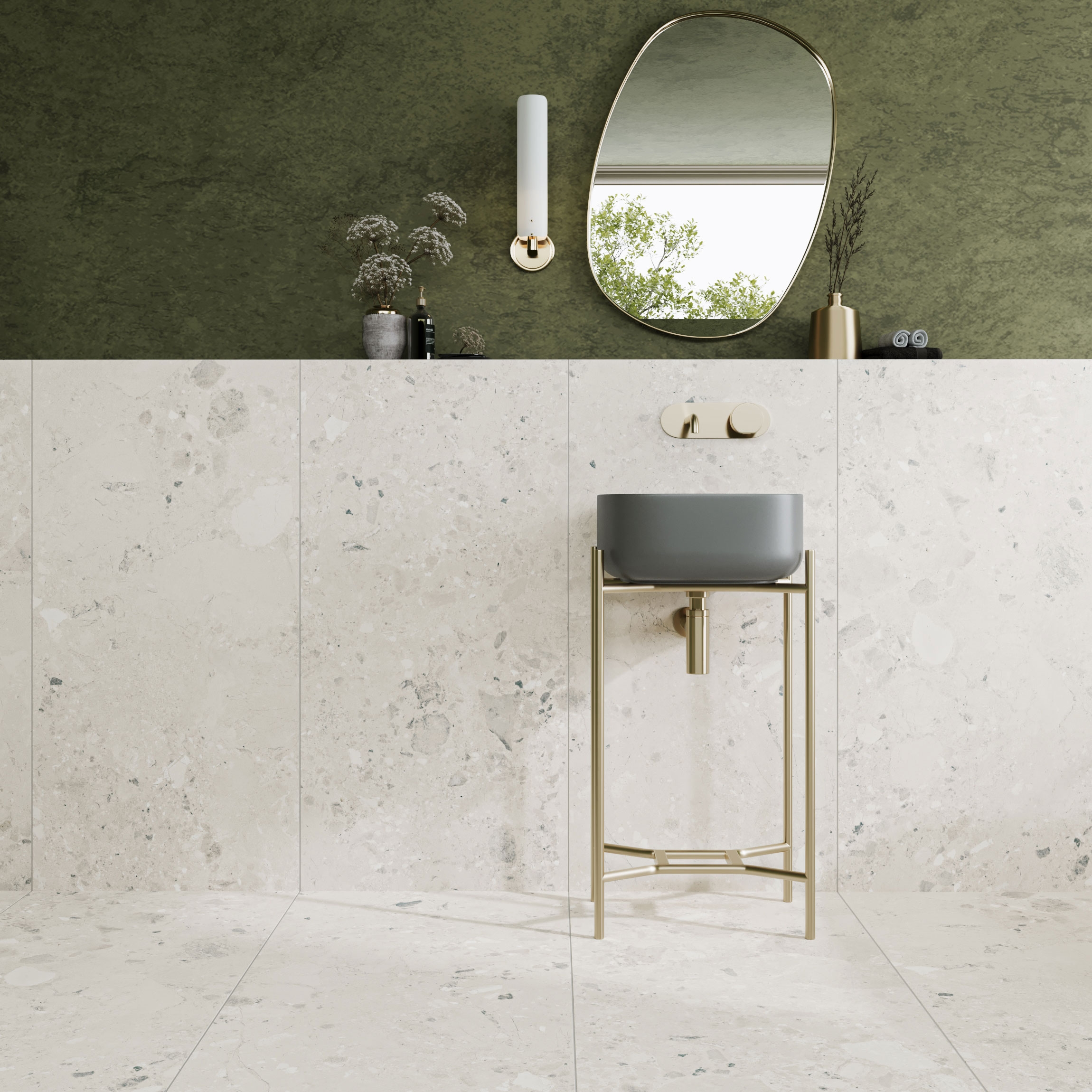
Dimensional influence within tile design for home interior surfaces affects scale perception, continuity, and grout frequency. Large-format tiles above 600×600 mm reduce grout visibility by approximately 35%. Small-format tiles increase surface articulation. Rectangular formats extend perceived surface length when aligned with circulation paths.
Tile Surface Finish Function
Surface finish role in tiles design for home interior surfaces relates to reflectivity control, slip resistance, and tactile response. Polished finishes increase light reflectance by nearly 20%. Matt finishes lower glare intensity. Textured finishes raise slip resistance in wet zones. Finish selection balances aesthetics with safety performance.
Tile Pattern Logic
Pattern logic in tiles design for home interior surfaces defines directional flow, proportional balance, and focal emphasis. Straight-lay patterns reinforce linear order. Herringbone patterns introduce controlled movement. Chevron layouts amplify visual depth. Pattern logic reshapes spatial perception without altering physical dimensions.
Tile Colour Systems
Colour systems within tiles designed for home interior surfaces regulate brightness perception, thermal tone, and inter-surface continuity. Light tones expand perceived room volume. Dark tones anchor functional zones. Neutral palettes maintain long-term relevance. Consistent colour systems strengthen interior cohesion.
Functional Zoning In Tile Design
Functional zoning in tiles design for home interior surfaces aligns tile performance with interior usage intensity. Bathrooms require low-absorption and high-friction surfaces. Kitchens prioritise stain resistance and cleanability. Living areas demand abrasion resistance. Zoning logic ensures performance accuracy across spaces.
Why Tile Design Is Important For Modern Residential Interiors?
Tiles design is important for modern residential interiors because tile design governs surface durability, moisture resistance, spatial perception, hygiene control, and long-term maintenance efficiency across residential floors and walls. Tile design for modern residential interiors operates as a surface performance system. Tiles design for modern residential interiors aligns functional requirements with contemporary visual order. We treat tile design importance as a measurable built-environment outcome.
Performance Reliability
Performance reliability in modern residential tiles design ensures interior surfaces withstand daily foot traffic, impact stress, and moisture exposure. Porcelain tiles deliver water absorption rates below 0.5%. High abrasion resistance ratings support residential circulation zones. Performance-focused tile design extends surface lifespan and reduces premature replacement.
Spatial Perception
Spatial perception shaped by tile design improves visual continuity and proportional balance in modern residential interiors. Large-format tiles above 600×600 mm reduce grout density by approximately 30–35%. Reduced grout interruption creates uninterrupted planes. Visual continuity increases perceived room volume without structural alteration.
Hygiene Control
Hygiene control supported by tile design improves cleanliness standards within residential interiors. Glazed tile surfaces resist bacterial adhesion. Low-porosity materials prevent moisture retention. Reduced grout joints limit dirt accumulation. Tile design directly contributes to healthier living environments.
Visual Coherence
Visual coherence achieved through tile design establishes a unified interior language across residential spaces. Consistent colour systems reduce visual fragmentation. Controlled pattern geometry maintains surface order. Material continuity supports modern minimal interior principles. Tile design defines residential aesthetic identity.
Maintenance Efficiency
Maintenance efficiency enabled by tile design reduces long-term residential upkeep demands. Durable tile materials resist surface wear. Matt finishes concealing micro-scratches. Neutral colour palettes retain appearance consistency. Maintenance-oriented tile design lowers lifecycle maintenance costs.
Functional Zoning
Functional zoning reinforced by tile design aligns surface properties with residential space usage. Bathrooms require anti-slip and low-absorption tiles. Kitchens prioritise stain resistance and cleanability. Living areas demand abrasion-resistant finishes. Tile design ensures zone-specific performance accuracy.
How Does Tile Design Support Thermal Comfort In Residential Homes?
Thermal comfort in residential homes improves when interior surface design manages heat absorption, thermal mass, surface conductivity, radiant exchange, and indoor temperature stability through engineered tile materials and layouts. Dense tiled surfaces moderate temperature fluctuations. Low-porosity tile bodies stabilise heat flow. Surface finishes influence radiant heat perception. Dimensional planning reduces thermal breaks. Integrated tile design supports passive cooling efficiency, energy stability, and consistent indoor comfort, particularly in warm residential environments such as the UAE.
Tile Material Heat Absorption
Indoor thermal stability increases when high-density tile materials absorb heat slowly and release stored energy gradually. Porcelain tile bodies exceed 2,300 kg/m³ in density. High thermal mass delays heat transmission. Controlled heat release reduces rapid temperature swings. Stable surface temperatures support daytime comfort.
Surface Thermal Conductivity
Surface heat transfer efficiency depends on tile thermal conductivity characteristics. Porcelain tiles average approximately 1.3 W/m·K in conductivity. Ceramic tiles present lower values. Balanced conductivity limits sudden heat gain. Controlled surface temperatures reduce discomfort during peak indoor heat periods.
Passive Cooling Through Tiles
Passive cooling effectiveness improves when tiled interiors release stored heat during cooler ambient periods. Hard tile surfaces dissipate accumulated heat faster than soft flooring. Night-time heat release lowers internal heat retention. Passive dissipation supports natural cooling cycles in residential homes.
Radiant Heat And Surface Finish
Perceived thermal comfort varies based on surface finish reflectivity and texture. Matt finishes reduce radiant heat glare. Light-toned finishes reflect higher levels of solar energy. Textured surfaces alter foot-contact temperature sensation. Finish selection affects comfort perception without changing air temperature.
Floor-Based Thermal Buffering
Indoor air temperature consistency improves when tiled floors function as thermal buffers. Large tiled floor areas stabilise surrounding air layers. Even heat exchange reduces localised hot zones. Stable floor temperatures contribute to balanced indoor thermal conditions.
Radiant System Integration
Thermal performance improves when tile design supports radiant temperature control systems. Dense tile materials transmit thermal energy efficiently. Low surface resistance enhances system responsiveness. Radiant cooling and heating systems paired with tiles deliver uniform temperature distribution.
Dimensional Thermal Continuity
Thermal uniformity increases when tile dimensions minimise grout density and surface interruptions. Large-format tiles above 600×600 mm reduce grout lines by approximately 30–35%. Fewer joints reduce thermal breaks. Continuous surfaces promote even heat distribution.
How Does Tile Design Influence Spatial Perception In Interior Spaces?

Spatial perception in interior spaces changes when tile design controls visual continuity, surface scale, directional flow, light interaction, and proportional balance across walls and floors. Surface geometry alters how size and depth are interpreted. Dimensional formats reshape visual boundaries. Colour and finish affect brightness perception. Layout logic guides eye movement. Tile design functions as a spatial modulation system rather than a decorative layer.
Tile Size And Visual Continuity
Perceived space expands when larger tile formats reduce visual interruption across interior surfaces. Large-format tiles above 600×600 mm reduce grout lines by approximately 30–35%. Fewer joints create uninterrupted planes. Continuous surfaces increase perceived room width and depth. Reduced segmentation enhances openness.
Tile Orientation And Directional Flow
Spatial length and width perception changes when tile orientation guides eye movement. Rectangular tiles laid lengthwise elongate corridors. Vertical wall tile alignment increases perceived ceiling height. Horizontal alignment widens narrow spaces. Directional placement reshapes spatial proportions without structural change.
Grout Density And Spatial Scale
Room scale appears larger when grout density decreases across tiled surfaces. Narrow grout joints below 3 mm reduce visual fragmentation. Consistent grout colour limits contrast. Lower joint frequency supports surface continuity. Reduced segmentation increases perceived spatial calm.
Tile Finish And Light Interaction
Brightness perception increases when tile finishes manage light reflection and diffusion effectively. Polished finishes reflect higher light levels. Matt finishes diffusing light evenly. Balanced reflectivity prevents glare. Controlled light behaviour improves depth perception and spatial clarity.
Colour Systems And Spatial Volume
Interior volume perception shifts when tile colour systems manage contrast and tonal hierarchy. Light-coloured tiles reflect more light. Dark tiles visually compress surfaces. Monochromatic palettes unify boundaries. Gradual tonal transitions enhance perceived depth.
Pattern Geometry And Spatial Rhythm
Spatial rhythm emerges when tile patterns introduce repetition and movement across surfaces. Straight-lay patterns stabilise visual order. Herringbone patterns create directional motion. Chevron layouts increase perceived dynamism. Pattern geometry influences how space is navigated visually.
Surface Continuity Across Interior Zones
Spatial coherence strengthens when tile design remains consistent across connected interior areas. Continuous flooring between rooms removes visual breaks. Matching wall and floor tones align spatial planes. Unified surfaces extend perceived interior flow. Reduced transitions improve openness.
What Types Of Tile Design Are Commonly Used In Homes?
Residential tile design commonly follows material composition, surface finish, dimensional format, and visual pattern logic to meet durability, maintenance, and interior aesthetics requirements across floors and walls. Interior tile design categories respond to usage intensity, moisture exposure, and spatial perception goals. We classify tile design types based on function-first surface engineering rather than decoration trends.
Material-Based Tile Types
Material selection determines structural performance, water absorption behaviour, and wear resistance across residential spaces. Porcelain tiles dominate high-traffic interiors due to absorption below 0.5%. Ceramic tiles serve low-impact wall applications. Natural stone tiles appear in feature areas. Material-driven design selection defines functional suitability.
Finish-Based Tile Classifications
Surface finish classification controls reflectivity, grip level, and visual softness across interior environments. Matt tiles reduce glare and improve slip resistance. Polished tiles increase light reflection and visual clarity. Structured finishes enhance safety in wet areas. Finish selection aligns comfort with functional control.
Large-Format Tile Design
Visual continuity increases when large-format tiles minimise grout density across interior surfaces. Formats above 600×600 mm reduce joint frequency by approximately 30–35%. Continuous planes expand perceived space. Large-format tile design supports contemporary residential interiors.
Pattern-Driven Tile Styles
Directional movement and surface rhythm depend on pattern-driven tile layouts. Straight-lay designs maintain minimal order. Herringbone layouts introduce controlled motion. Chevron layouts increase perceived depth. Pattern logic influences spatial flow without altering structure.
Textured And Decorative Tiles
Surface character enhancement occurs when textured and decorative tiles introduce depth and focal interest. Relief tiles create tactile variation. Patterned tiles define feature walls. Decorative applications remain zone-specific to preserve balance. Controlled usage prevents visual overload.
Wood-Effect Tile Design
Natural visual warmth combines with durability when wood-effect tile design replaces organic flooring materials. Porcelain wood effect tiles replicate grain patterns. Moisture resistance exceeds timber flooring. Dimensional stability supports kitchens and bathrooms. Wood-look tile design bridges aesthetics and performance.
Stone-Effect Tile Design
Stone-inspired tile design delivers natural appearance with controlled performance characteristics. Marble effect tiles provide visual luxury without high porosity. Concrete effect tiles support industrial interiors. Consistent appearance reduces maintenance complexity. Stone-effect designs balance authenticity and durability.
Mosaic Tile Accent Zoning
Detail emphasis increases when mosaic tile design defines specific residential zones. Small-format tiles enhance texture density. Mosaic applications highlight showers and splashbacks. High grout frequency improves slip resistance. Accent zoning strengthens interior hierarchy.
What Tile Materials Perform Best For Long-Term Residential Use?
Long-term residential performance depends on tile materials that maintain structural integrity, low water absorption, abrasion resistance, thermal stability, and surface durability under continuous domestic use. Material composition determines lifespan. Density controls wear tolerance. Porosity affects moisture resistance. Surface hardness governs scratch resistance. Chemical stability influences maintenance longevity. We evaluate tile materials for long-term residential use based on measurable physical properties rather than visual preference, focusing on floors and walls exposed to daily traffic, cleaning cycles, and environmental stress.
Porcelain Tile Performance
Extended residential lifespan is achieved when dense porcelain tile bodies resist moisture penetration, surface wear, and thermal fluctuation. Water absorption remains below 0.5%. High firing temperatures increase density. Abrasion resistance supports high-traffic areas. Porcelain tiles maintain dimensional stability over decades of use.
Ceramic Tile Residential Suitability
Wall durability and aesthetic consistency improve when ceramic tile materials serve low-load residential applications. Water absorption ranges between 3% and 7%. Glazed surfaces resist staining. Lower density limits floor suitability. Ceramic tiles perform reliably on walls and low-impact zones.
Natural Stone Tile Limitations
Performance variability occurs when natural stone tile materials exhibit inconsistent density and porosity. Marble absorbs moisture above 0.5%. Limestone presents higher porosity. Surface sealing reduces absorption but increases maintenance dependency. Natural stone suits feature areas rather than long-term high-traffic zones.
Vitrified Tile Traffic Performance
High-load resistance improves when vitrified tile materials combine glass-like density with low porosity. Water absorption approaches 0.1%. Surface hardness exceeds standard ceramic ratings. Vitrified tiles withstand abrasion and chemical exposure. Long-term performance supports kitchens and circulation spaces.
Quarry Tile Durability
Impact resistance increases when quarry tile materials use extruded clay bodies fired at high temperatures. Dense structure supports heavy use. Slip resistance suits utility spaces. Limited colour variation restricts aesthetic flexibility. Quarry tiles perform reliably in service-oriented residential zones.
Cement Tile Performance Factors
Surface wear sensitivity increases when cement tile materials lack a protective glaze layer. Pigmented layers provide visual depth. Porosity requires sealing. Maintenance frequency remains high. Cement tiles suit decorative applications rather than long-term primary surfaces.
Glass Tile Residential Suitability
Moisture resistance improves when glass tile materials eliminate porosity entirely. Non-absorbent surfaces resist staining. Surface hardness limits floor application. Reflective properties enhance light distribution. Glass tiles perform best on walls and splashbacks.
What Tile Sizes Are Preferred In Contemporary Home Design?

Contemporary home design prefers tile sizes that maximise visual continuity, reduce grout density, enhance spatial proportion, and support minimal surface articulation across interior floors and walls. Dimensional selection reflects modern architectural priorities. Large surfaces favour uninterrupted planes. Reduced joint frequency supports cleaner aesthetics. Scale alignment between room size and tile format governs design success. We evaluate preferred tile sizes through spatial performance, not trend adoption.
Large-Format Tiles For Open Plans
Visual openness increases when expansive floor areas use large-format tiles with minimal joint interruption. Formats such as 600×600 mm, 600×1200 mm, and 800×800 mm dominate contemporary interiors. Grout line reduction reaches approximately 30–35%. Continuous planes strengthen modern spatial language. Large formats suit living rooms and open layouts.
Rectangular Tiles And Directional Emphasis
Spatial directionality strengthens when rectangular tile formats guide visual movement. Sizes such as 300×600 mm and 200×1200 mm elongate surfaces. Lengthwise placement extends perceived room depth. Vertical wall alignment increases perceived ceiling height. Rectangular formats support architectural flow control.
Oversized Slab Tile Design
Surface minimalism increases when slab-format tiles reduce segmentation almost entirely. Dimensions exceeding 1200×2400 mm create near-monolithic surfaces. Joint visibility becomes negligible. Seamless appearance supports luxury contemporary interiors. Slab tiles suit feature walls and expansive floors.
Medium-Format Tiles For Balance
Proportional balance improves when moderate tile sizes align with room scale. Formats such as 450×450 mm and 300×300 mm maintain visual order in compact spaces. Grout density remains controlled. Medium formats prevent scale dominance. Balanced sizing supports bedrooms and secondary areas.
Small-Format Tiles For Texture Control
Surface articulation increases when small-format tiles introduce texture density intentionally. Sizes below 200×200 mm enhance detail resolution. High joint frequency improves slip resistance. Controlled placement defines accent zones. Small formats suit showers, niches, and splashbacks.
Wall Tile Size Preferences
Vertical surface clarity improves when wall tile sizes emphasise proportion and alignment. Rectangular wall tiles between 300×600 mm and 400×800 mm dominate modern interiors. Horizontal placement widens perception. Vertical placement elevates height perception. Wall-specific sizing supports clean visual planes.
Tile Size Coordination Across Zones
Spatial coherence strengthens when tile sizes transition logically between connected areas. Floor continuity uses consistent formats. Wall variations follow proportional hierarchy. Coordinated sizing reduces visual disruption. Dimensional consistency supports contemporary interior flow.
How Do Tile Colours Affect Residential Interior Aesthetics?
Residential interior aesthetics change when tile colour selection controls light reflectance, spatial perception, visual continuity, emotional tone, and surface hierarchy across floors and walls. Colour functions as a spatial modifier. Tonal value affects brightness perception. Hue selection influences warmth or coolness. Contrast management defines focal hierarchy. Tile colour operates as a structural aesthetic tool rather than a decorative choice.
Tile Colour And Light Reflectance
Interior brightness increases when tile colours reflect higher proportions of visible light. Light-toned tiles reflect more ambient light. White and off-white surfaces enhance illumination efficiency. Higher reflectance reduces reliance on artificial lighting. Bright surfaces expand perceived interior openness.
Colour Tone And Spatial Volume
Perceived room size changes when tile colour tone alters boundary visibility. Light colours visually push surfaces outward. Dark colours visually pull surfaces inward. Continuous light flooring enlarges compact rooms. Controlled dark tones anchor larger spaces without overwhelming scale.
Tile Colour And Emotional Tone
The interior’s emotional atmosphere shifts when tile colours signal warmth or coolness. Warm tones such as beige and sand create comfort-driven environments. Cool greys and blues convey calm and modernity. Neutral palettes stabilise emotional response. Colour temperature selection aligns interiors with lifestyle intent.
Colour Consistency And Visual Continuity
Aesthetic coherence strengthens when tile colours remain consistent across connected interior zones. Unified colour systems reduce visual fragmentation. Seamless floor transitions extend spatial flow. Repeated tonal values align walls and floors. Consistency enhances modern interior clarity.
Contrast Control And Focal Hierarchy
Visual focus emerges when tile colour contrast defines spatial hierarchy intentionally. High-contrast tiles highlight feature zones. Low-contrast schemes preserve minimal aesthetics. Accent colours direct attention. Controlled contrast prevents visual clutter.
Colour Depth And Texture Perception
Perceived surface texture changes when tile colour depth interacts with light and shadow. Dark colours emphasise texture variation. Light colours soften surface relief. Colour depth modifies tactile perception visually. Texture visibility affects perceived material richness.
Tile Colour And Maintenance Perception
Surface cleanliness perception depends on tile colour’s ability to conceal wear and residue. Mid-tone colours mask dust and water marks. Very dark colours show residue easily. Very light colours reveal stains. Colour choice influences perceived upkeep effort.
What Tile Finishes Are Suitable For Home Interiors?
Home interior suitability depends on surface finishes that regulate slip resistance, light interaction, tactile response, durability, and maintenance stability across residential floors and walls. Finish selection defines safety performance. Reflectivity shapes brightness perception. Texture influences grip and comfort. Long-term usability depends on how finishes respond to moisture, traffic, and cleaning cycles. Tile finishes function as performance layers, not decorative coatings.
Matt Tile Finishes
Everyday interior performance improves when surface reflectivity remains low and grip remains controlled. Matt finishes diffusing light evenly. Reduced glare supports visual comfort. Subtle surface texture increases slip resistance. Wear marks appear less prominent. Matt finishes perform well in living rooms, bedrooms, kitchens, and circulation areas.
Polished Tile Finishes
Interior brightness increases when highly reflective surfaces amplify natural and artificial light. Polished finishes create mirror-like reflectance. Smooth surfaces enhance visual clarity. Slip resistance remains lower in wet conditions. Polished finishes suit feature walls and dry residential zones with controlled moisture exposure.
Satin And Semi-Polished Finishes
Surface balance improves when moderate sheen combines visual depth with controlled grip. Satin finishes reflect light softly. Reduced gloss limits glare. Surface traction remains higher than polished alternatives. Fingerprints and dust visibility decreases. Semi-polished finishes suit living spaces requiring elegance and usability.
Textured Tile Finishes
Safety performance increases when surface texture enhances friction under wet conditions. Raised surface profiles improve grip. Water displacement reduces slip risk. Tactile feedback increases foot stability. Textured finishes suit bathrooms, showers, and utility zones.
Lappato Tile Finishes
Visual depth increases when partial polishing leaves micro-texture intact. Lappato finishes balance shine and grip. Controlled reflectivity adds surface interest. Moderate traction supports residential floors. Lappato finishes align with contemporary interior design language.
Anti-Slip Tile Finishes
Functional safety improves when finishes meet higher friction requirements in critical zones. Micro-textured surfaces maintain grip when wet. Slip resistance remains consistent over time. Performance compliance supports bathrooms and kitchens. Anti-slip finishes prioritise usability and risk reduction.
Natural-Look Tile Finishes
Material realism improves when surface finishes replicate natural textures accurately. Wood-look and stone-look finishes enhance visual warmth. Textural variation increases depth perception. Maintenance remains lower than natural materials. Natural-look finishes suit modern and transitional interiors.
How Does Tile Design Vary By Room In A Home?

Tile design varies by room in a home because surface performance requirements change based on moisture exposure, foot traffic intensity, hygiene needs, safety standards, and visual function across different residential spaces. Interior zoning dictates material choice. Finish selection aligns with usage risk. Size and layout respond to room scale. Colour systems support functional identity. Tile design adapts room-by-room to maintain performance accuracy and visual coherence.
Living Room Tile Design
Surface durability and visual continuity guide tile design in living rooms. Moderate abrasion resistance supports daily foot traffic. Large-format tiles reduce grout density. Neutral colour systems enhance openness. Matt or satin finishes control glare. Living room tile design prioritises comfort and spatial flow.
Kitchen Tile Design Requirements
Functional resistance defines tile design in kitchen environments. Low porosity prevents stain absorption. High abrasion resistance supports frequent movement. Matt or textured finishes improve slip safety. Medium to large tile sizes simplify cleaning. Kitchen tile design balances hygiene with durability.
Bathroom Tile Design Adaptation
Moisture management and safety govern tile design in bathrooms. Water absorption below 0.5% limits moisture ingress. Anti-slip finishes increase traction. Smaller tiles improve slope control near drains. Light colours enhance brightness. Bathroom tile design prioritises safety and cleanliness.
Bedroom Tile Design Considerations
Comfort and visual calm influence tile design in bedrooms. Low-reflective finishes reduce visual disturbance. Warm-toned colour palettes support relaxation. Medium-format tiles align with room scale. Smooth textures improve barefoot comfort. Bedroom tile design emphasises tranquillity.
Hallway And Corridor Tile Design
Abrasion resistance and directional guidance shape tile design in hallways. High PEI ratings support frequent traffic. Rectangular tiles guide movement. Darker tones conceal wear. Narrow grout lines reduce visual clutter. Corridor tile design supports durability and flow.
Dining Area Tile Design
Surface resilience and aesthetic continuity guide tile design in dining spaces. Stain resistance supports food exposure. Coordinated floor tiles align with adjacent rooms. Matt finishes control reflections. Balanced colour tones maintain warmth. Dining area tile design supports shared use.
Utility And Laundry Tile Design
Slip resistance and chemical durability define tile design in utility zones. Textured finishes improve safety. Dense materials resist detergent exposure. Smaller tiles manage drainage slopes. Practical colour tones conceal residue. Utility room tile design prioritises function over appearance.
Entryway Tile Design Strategy
Impact resistance and dirt tolerance influence tile design at entry points. Hard-wearing materials handle outdoor debris. Anti-slip finishes improve safety. Darker tones reduce visible staining. Larger tiles simplify maintenance. Entryway tile design supports durability and cleanliness.
What Tile Design Patterns Are Used In Contemporary Homes?
Contemporary homes use tile design patterns that enhance visual continuity, guide spatial direction, reduce surface fragmentation, and reinforce minimal architectural order across interior floors and walls. Pattern selection influences movement perception. Layout geometry controls rhythm and balance. Joint alignment affects visual calm. Contemporary tile patterns prioritise structure, proportion, and spatial clarity rather than ornamentation.
Straight-Lay Pattern
Visual order strengthens when tiles align in a linear grid without offset or rotation. Clean joint alignment reduces visual noise. Symmetry supports minimalist interiors. Large-format tiles benefit most from straight-lay layouts. This pattern emphasises surface continuity and architectural precision.
Brick-Bond Pattern
Subtle directional flow appears when tiles offset by 50% along the long edge. Staggered joints reduce monotony. Visual movement increases without disrupting balance. Rectangular tiles perform best in this layout. Brick-bond patterns suit living areas and corridors.
Vertical Stack Pattern
Perceived ceiling height increases when rectangular tiles stack vertically on walls. Continuous vertical joints draw the eye upward. Narrow wall formats enhance this effect. Vertical stacking supports modern bathroom and feature wall designs. Spatial elevation improves without structural changes.
Horizontal Stack Pattern
Perceived room width increases when tiles stack horizontally across walls. Linear alignment stretches visual boundaries. Horizontal joints reinforce lateral movement. This pattern suits compact rooms. Visual openness improves through alignment rather than scale.
Herringbone Pattern
Surface movement intensifies when tiles interlock at angled orientations. Repeating V-shaped geometry introduces rhythm. Directional energy becomes more pronounced. Wood-effect tiles frequently use this layout. Herringbone patterns act as focal surface treatments.
Chevron Pattern
Structured symmetry emerges when angled tiles meet at continuous centre points. Clean zig-zag alignment creates precision. Directional flow appears more refined than herringbone. Visual depth increases. Chevron layouts support contemporary statement floors and walls.
Modular Pattern
Visual harmony improves when mixed tile sizes repeat in a planned sequence. Proportional relationships reduce randomness. Repetition establishes rhythm. Modular layouts suit large areas. Balance emerges through mathematical alignment.
Grid-Based Pattern
Spatial calm strengthens when equal tile sizes form consistent square grids. Predictable repetition supports modern interiors. Grout alignment remains uniform. Grid patterns pair well with neutral colour systems. Architectural clarity becomes dominant.
Random Linear Pattern
Natural variation appears when rectangular tiles install with irregular offsets. Controlled randomness reduces rigidity. Visual softness increases. This pattern suits stone-effect tiles. Organic flow balances contemporary minimalism.
How Does Slip Resistance Rating Affect Tile Design For Homes?
Residential tile design changes when slip resistance ratings define surface safety thresholds, finish selection, texture engineering, material suitability, and room-specific placement across interior floors. Safety classification determines usable finishes. Friction performance governs wet-area suitability. Texture depth influences maintenance behaviour. Material structure affects long-term grip stability. We treat slip resistance rating as a primary functional input within residential tile design, particularly for bathrooms, kitchens, circulation zones, and entry areas.
Friction Performance And Surface Safety
Household safety improves when surface friction values maintain adequate grip under dry and wet conditions. Higher slip resistance ratings indicate increased traction. Measured coefficients of friction quantify performance. Stable grip reduces fall risk during daily movement. Safety-driven design integrates friction metrics into surface selection.
Slip Resistance And Finish Limitations
Design flexibility narrows when higher slip resistance becomes mandatory. Highly polished finishes deliver lower traction. Matt and structured finishes provide increased grip. Micro-textured surfaces balance safety and appearance. Finish choice aligns aesthetic intent with functional safety constraints.
Moisture Exposure And Rating Selection
Risk management intensifies in spaces exposed to water, humidity, and cleaning agents. Bathrooms demand elevated traction levels. Kitchens require resistance against spills and oils. Utility zones experience frequent wet contact. Room-specific exposure dictates minimum slip resistance ratings.
Surface Texture Engineering
Traction performance increases when surface texture depth enhances friction at contact points. Raised profiles improve grip. Micro-roughness preserves visual subtlety. Deeper textures improve safety but affect cleaning effort. Texture engineering balances usability with maintenance practicality.
Material Capability And Slip Ratings
Slip resistance consistency depends on inherent material structure. Porcelain tiles support engineered textures with stable performance. Ceramic tiles achieve moderate ratings through glaze control. Natural stone exhibits variable traction based on finish treatment. Material selection prioritises predictable grip behaviour.
Layout Configuration And Traction
Movement safety improves when layout geometry reinforces grip underfoot. Smaller formats increase grout frequency. Grout joints contribute additional traction. Directional layouts guide foot traffic flow. Layout planning complements surface friction characteristics.
Long-Term Grip Retention
Residential usability improves when slip resistance performance remains stable over time. Wear-resistant textures maintain traction levels. Dense materials resist surface polishing. Consistent finishes preserve safety characteristics. Long-term stability forms a core design requirement.
How Does Grout Selection Influence Tile Design Performance?

Tile design performance changes when grout selection controls joint durability, moisture resistance, hygiene behaviour, colour continuity, and long-term structural stability across tiled surfaces. Joint material affects load distribution. Porosity influences staining and water ingress. Colour choice alters visual continuity. Joint width impacts movement tolerance. Grout functions as a performance component within tile systems, not a passive filler.
Grout Composition And Structural Stability
Surface integrity improves when grout composition supports load transfer and tile edge protection. Cementitious grouts absorb minor movement. Polymer-modified grouts increase flexural strength. Epoxy grouts deliver high compressive resistance. Proper composition prevents tile edge chipping and joint cracking.
Grout Moisture Resistance
Water protection improves when grout porosity remains low in moisture-exposed environments. Standard cement grout absorbs moisture. Sealed grout reduces water penetration. Epoxy grout remains non-porous. Moisture-resistant grout selection protects sublayers and extends tile system lifespan.
Grout Hygiene Performance
Surface cleanliness improves when grout resists bacterial growth and staining. Porous grout retains dirt and microbes. Low-absorption grout limits contamination. Epoxy grout prevents stain absorption entirely. Hygienic grout selection supports kitchens, bathrooms, and utility areas.
Grout Colour And Visual Continuity
Spatial perception changes when grout colour contrast alters surface segmentation. Matching grout colours reduce visual breaks. High-contrast grout emphasises tile geometry. Neutral grout tones preserve balance. Colour selection directly affects perceived surface continuity and scale.
Joint Width And Movement Tolerance
Crack resistance improves when grout width aligns with tile size and substrate movement. Narrow joints below 3 mm reduce visual clutter. Wider joints absorb structural movement. Incorrect joint width increases stress concentration. Dimensional planning ensures joint performance accuracy.
Grout Formulation And Maintenance
Long-term upkeep effort decreases when grout resists staining and surface degradation. Epoxy grout maintains colour stability. Polymer-enhanced grout reduces powdering. Sealed grout lowers cleaning frequency. Maintenance behaviour depends directly on grout chemistry.
Grout Lines And Slip Resistance
Surface traction increases when grout lines interrupt smooth tile planes. Higher joint frequency adds grip underfoot. Textured grout enhances friction. Smaller tiles improve traction through joint density. Grout indirectly contributes to slip resistance performance.
Thermal And Movement Accommodation
System resilience improves when grout accommodates thermal expansion and contraction. Flexible grout absorbs micro-movement. Rigid grout cracks under stress. Temperature variation influences joint behaviour. Correct grout selection supports long-term tile system stability.
How Does Tile Design Support Low-Maintenance Living?
Low-maintenance living is supported when tile design reduces cleaning frequency, limits moisture absorption, resists surface wear, minimises joint complexity, and maintains visual stability over long-term residential use. Surface engineering decisions control upkeep effort. Material density limits staining. Finish selection manages mark visibility. Dimensional planning reduces grout exposure. Integrated tile design lowers daily maintenance demand while preserving interior performance.
Low-Porosity Materials
Cleaning frequency decreases when dense tile bodies resist liquid penetration and staining. Porcelain tiles absorb less than 0.5% water. Low absorption prevents spill ingress. Surface contaminants remain superficial. Routine cleaning requires less chemical intervention.
Finish Selection And Wear Control
Surface appearance remains consistent when finishes conceal dust, water spots, and micro-scratches. Matt and satin finishes diffuse light. Reduced glare masks residue. Subtle texture hides minor abrasion. Finish choice directly lowers perceived cleaning needs.
Grout Minimisation Through Planning
Maintenance effort reduces when tile size selection limits grout exposure. Large-format tiles decrease joint frequency by approximately 30–35%. Fewer joints collect less dirt. Reduced grout length simplifies cleaning routines. Dimensional planning directly affects upkeep intensity.
Stain Resistance And Usability
Surface reliability increases when tile glazes resist household staining agents. Glazed porcelain resists oils and food acids. Chemical stability prevents discolouration. Surface integrity remains intact after repeated cleaning. Stain resistance lowers corrective maintenance.
Colour Stability Over Time
Aesthetic consistency improves when colour selection masks dust and wear patterns. Mid-tone and neutral colours conceal residue. Extreme light or dark tones reveal marks faster. Balanced palettes reduce visual maintenance pressure. Colour strategy influences upkeep perception.
Abrasion Resistance And Longevity
Replacement cycles extend when tile surfaces withstand friction and impact. High abrasion resistance ratings reduce surface degradation. Dense bodies resist chipping. Long-lasting surfaces eliminate frequent refurbishment. Durability directly supports low-maintenance living.
Moisture Control And Damage Prevention
Maintenance risk decreases when tile systems prevent moisture migration beneath surfaces. Low-absorption tiles block water ingress. Proper grout selection limits seepage. Dry substrates reduce mould formation. Moisture control prevents long-term repair issues.
Simple Cleaning Compatibility
Daily upkeep simplifies when tile surfaces tolerate basic cleaning agents and methods. Non-reactive glazes resist chemical damage. Smooth surfaces allow easy wiping. No specialised treatments remain necessary. Compatibility with simple care routines supports practical living.
What Tile Design Factors Improve Long-Term Property Value?
Long-term property value improves when interior tile design delivers durable surface performance, timeless visual relevance, low maintenance demand, functional safety, and spatial coherence across residential floors and walls. Surface specification signals build quality. Material longevity reduces renovation risk. Neutral aesthetics preserve resale flexibility. Performance alignment demonstrates design intent. We evaluate tile design factors through lifecycle value, buyer perception, and long-term usability rather than short-term visual appeal.
Material Durability And Value Stability
Perceived asset quality increases when dense tile materials maintain structural integrity under prolonged residential use. Porcelain and vitrified tiles resist abrasion and moisture. Water absorption below 0.5% prevents degradation. High-density bodies reduce edge chipping. Durable materials signal long-term construction reliability.
Timeless Aesthetic Systems
Market relevance remains stable when tile design avoids trend-dependent colours and patterns. Neutral palettes retain adaptability across décor changes. Low-contrast textures age predictably. Simple surface expressions reduce visual fatigue. Timeless design protects long-term buyer interest.
Low-Maintenance Ownership Appeal
Buyer confidence strengthens when interior surfaces demand minimal upkeep. Low-porosity tiles resist staining. Large-format tiles reduce grout maintenance by approximately 30–35%. Stable finishes conceal wear. Reduced maintenance effort enhances perceived property value.
Spatial Coherence And Perceived Quality
Interior value perception improves when tile design maintains continuity across connected rooms. Consistent flooring extends visual flow. Harmonised wall finishes reduce fragmentation. Unified surface systems communicate intentional planning. Spatial coherence elevates overall property standard.
Safety Performance Value
Residential desirability increases when tiled surfaces support everyday safety expectations. Adequate slip resistance lowers accident risk. Textured finishes improve grip in wet zones. Safety-conscious surface selection reflects responsible specification. Functional safety contributes to non-visible value.
Design Flexibility And Future Adaptation
Long-term appeal increases when tile design accommodates evolving interior styles. Neutral finishes integrate with varied furnishings. Non-directional patterns simplify redecoration. Balanced formats suit multiple layouts. Flexibility supports future occupant preferences.
Installation Quality Alignment
Construction credibility improves when tile design supports precise installation outcomes. Regular formats simplify alignment. Dimensionally stable materials reduce lippage. Narrow grout joints enhance finish accuracy. Clean execution increases buyer trust.
Functional Zoning Competence
Property evaluation improves when tile performance aligns with room-specific demands. Wet areas use moisture-resistant surfaces. High-traffic zones require abrasion resistance. Correct zoning demonstrates technical accuracy. Functional alignment supports long-term satisfaction.
What Common Mistakes Reduce Tile Design Efficiency In Homes?

Tile design efficiency reduces when surface specification ignores functional performance, spatial proportion, moisture exposure, safety requirements, and long-term maintenance behaviour across residential interiors. Inefficient decisions increase wear. Incorrect sizing disrupts perception. Inappropriate finishes raise safety risk. Poor layout planning increases waste. Tile design efficiency depends on technical alignment rather than visual preference.
Incorrect Tile Size Selection
Spatial performance declines when tile dimensions conflict with room proportions. Oversized tiles overwhelm compact rooms. Small tiles fragment large areas. Excessive grout density disrupts continuity. Poor scale matching reduces visual balance and installation efficiency.
Inappropriate Finish Choice
Surface usability decreases when finishes do not align with room conditions. Polished finishes increase slip risk in wet areas. Highly textured finishes complicate cleaning in living spaces. Finish mismatch raises safety and maintenance issues.
Slip Resistance Neglect
Residential safety reduces when traction performance is overlooked during tile selection. Low-friction surfaces increase fall risk. Wet zones demand higher grip levels. Inconsistent slip resistance disrupts functional zoning. Safety oversight compromises daily usability.
Poor Grout Specification
System durability weakens when grout type and joint width are incorrectly specified. High-porosity grout absorbs stains. Incorrect joint width causes cracking. Colour mismatch increases visual fragmentation. Joint planning errors reduce lifespan and appearance quality.
Excessive Pattern And Colour Contrast
Visual efficiency decreases when excessive contrast disrupts surface continuity. Multiple patterns compete for attention. High contrast exaggerates segmentation. Visual noise reduces spatial calm. Over-design undermines interior coherence.
Inconsistent Tile Selection
Spatial flow weakens when tile transitions lack continuity. Abrupt size changes disrupt movement perception. Colour mismatches break visual flow. Inconsistent finishes fragment interiors. Continuity failure reduces perceived quality.
Layout Optimisation Neglect
Material efficiency declines when layout planning remains insufficient. Excessive cutting increases waste. Poor alignment disrupts symmetry. Unplanned layouts raise labour complexity. Layout neglect increases installation cost and visual inconsistency.
Trend-Driven Design Choices
Long-term efficiency reduces when short-lived trends dominate tile selection. Strong colours age quickly. Complex patterns limit adaptability. Trend dependence accelerates renovation cycles. Timeless systems preserve efficiency and value.
Maintenance Behaviour Oversight
Upkeep effort increases when tile design overlooks cleaning and wear patterns. High-gloss finishes show marks easily. Light grout stains rapidly. Complex textures trap dirt. Maintenance oversight reduces practical living efficiency.
Material And Usage Mismatch
Surface performance fails when material strength does not match foot traffic demand. Low-density tiles wear prematurely. High-impact zones require abrasion resistance. Incorrect material zoning increases damage risk. Usage misalignment reduces system efficiency.
How Does Tile Design Align With Modern And Luxury Interior Styles?
Alignment with modern and luxury interior styles occurs when tile design delivers surface clarity, material authenticity, dimensional precision, controlled light behaviour, and long-term performance across interior floors and walls. Architectural restraint defines modern luxury. Visual calm signals refinement. Seamless surfaces enhance proportion. Precision detailing communicates quality. Tile design functions as an architectural finish system rather than a decorative layer.
Minimal Surface Articulation
Visual order strengthens when surface articulation remains clean, uninterrupted, and structurally disciplined. Large-format tiles reduce grout frequency by approximately 30–35%. Straight-lay layouts preserve alignment. Neutral tonal ranges limit visual noise. Reduced segmentation aligns with modern interior principles focused on simplicity and clarity.
Material Realism And Luxury
Perceived luxury increases when surface appearance replicates authentic material characteristics with accuracy. Stone effect tiles follow natural veining logic. Concrete-effect tiles maintain controlled tonal variation. Wood-effect tiles reproduce grain scale proportionately. Material realism enhances visual credibility without natural material limitations.
Dimensional Precision And Proportion
Interior refinement improves when tile dimensions align precisely with room geometry and scale. Oversized formats create expansive planes. Slab tiles minimise joint visibility. Accurate sizing reinforces proportional balance. Dimensional discipline communicates architectural intent and construction quality.
Controlled Reflectivity
Visual sophistication increases when light interaction remains measured and intentional. Matt and satin finishes diffuse light evenly. Excessive gloss disrupts restraint. Balanced sheen adds depth without glare. Finish control shapes atmosphere through subtle reflection management.
Restrained Colour Systems
Design longevity strengthens when colour palettes remain neutral and tightly controlled. Monochromatic systems enhance cohesion. Warm neutrals convey understated richness. Limited contrast preserves visual calm. Restrained colour selection protects relevance across changing interior trends.
Pattern Discipline
Spatial coherence improves when layout geometry follows strict alignment and repetition logic. Straight and stacked patterns preserve order. Excessive pattern complexity introduces distraction. Disciplined layouts reinforce modern luxury through predictability and balance.
Seamless Surface Continuity
Luxury perception increases when tiled surfaces transition without visual interruption. Continuous flooring extends spatial flow. Coordinated wall and floor tones unify planes. Reduced thresholds enhance openness. Seamless continuity signals high-level design execution.
Precision Detailing
Craftsmanship visibility increases when edges, joints, and alignment remain exact. Narrow grout joints below 3 mm reduce segmentation. Colour-matched grout preserves continuity. Accurate installation reflects technical control. Detail precision defines luxury outcomes.
How Does Tile Design Contribute To Sustainable Residential Interiors?

Sustainable residential interiors benefit when tile design reduces resource consumption, extends surface lifespan, improves indoor environmental quality, supports energy efficiency, and lowers long-term replacement frequency through durable materials and efficient surface systems. Sustainability outcomes depend on lifecycle performance. Material density affects longevity. Finish stability reduces waste. Dimensional planning limits resource loss. Tile design functions as a sustainability enabler rather than a decorative choice.
Material Durability And Resource Efficiency
Environmental impact reduces when dense tile materials deliver long service life under residential use. Porcelain tiles exceed 20–30 years of functional lifespan. Low water absorption below 0.5% prevents degradation. Extended durability lowers replacement demand. Reduced replacement frequency conserves raw materials and manufacturing energy.
Waste Reduction Through Planning
Construction waste decreases when tile size and layout minimise cutting and offcuts. Large-format tiles reduce cut frequency by approximately 10–15%. Optimised layouts lower material wastage. Accurate planning improves installation efficiency. Waste reduction directly supports sustainable construction practices.
Indoor Environmental Quality Support
Indoor air quality improves when tile surfaces remain chemically stable and non-emissive. Fired ceramic and porcelain tiles emit zero volatile organic compounds. Inert surfaces prevent off-gassing. Non-porous finishes resist mould growth. Healthy interiors align with sustainability objectives.
Thermal Performance And Energy Efficiency
Residential energy demand reduces when tiled surfaces contribute to thermal regulation. High thermal mass moderates indoor temperature fluctuation. Heat absorption and gradual release support passive cooling. Stable surface temperatures reduce mechanical cooling reliance. Energy efficiency improves at the building level.
Water Efficiency Through Low Maintenance
Household water usage decreases when surfaces require minimal cleaning effort. Low-porosity tiles resist staining. Smooth finishes allow fast cleaning. Reduced scrubbing lowers water consumption. Efficient maintenance supports sustainable daily living.
Longevity-Driven Design
Environmental pressure reduces when interior finishes delay renovation timelines. Timeless colour systems prevent aesthetic obsolescence. Neutral palettes maintain long-term relevance. Durable finishes resist visual ageing. Reduced renovation frequency lowers material disposal volume.
Sustainable Material Compatibility
Circular material potential increases when tile composition supports recycling pathways. Ceramic and porcelain tiles use natural minerals. Fired bodies maintain chemical stability. Broken tiles re-enter aggregate use streams. Material compatibility supports circular construction systems.
Performance Zoning Efficiency
Sustainability outcomes strengthen when tile performance aligns precisely with room usage. Wet zones use moisture-resistant materials. High-traffic zones receive abrasion-resistant surfaces. Correct zoning prevents premature failure. Performance accuracy reduces resource waste over time.
Summing Up
Long-term residential interior success depends on tile design operating as a unified performance system where material durability, dimensional accuracy, surface finish, colour control, grout specification, and room-specific application collectively determine usability, safety, maintenance efficiency, sustainability impact, and property value. Performance-led material selection extends surface lifespan.
Correct sizing and layout preserve spatial clarity. Finish and slip resistance protect daily safety. Grout and joint planning secure hygiene and structural stability. We conclude that residential interiors achieve lasting quality, visual stability, and economic value only when tile design follows an integrated, evidence-based, and function-first specification strategy rather than trend-driven surface selection.
